



A subscriber left a note recently that I’ve now seen come up in a few different fonts, and it feels like the right moment to talk about it plainly.
Here’s what they wrote:
“It seems that everything is for already well-established writers, and it’s rare that I can find something for a writer with less than 2 years of experience. It’s hard to gain experience with lack of opportunities shown for beginners.”
If this has been your experience, you’re not imagining it.
That “I need experience to get experience” feeling is real, and it’s extra brutal when you’re doing the responsible thing — scrolling job boards, trying to follow the rules, looking for “entry-level” and the door still feels bolted shut.
So let me say this:
You’re not broken. You’re not behind. And you’re not doing it wrong.
What’s happening is simpler (and more annoying) than that:
The definition of “beginner work” moved.
And nobody sent a memo.
Where Did All The Beginner Writing Jobs Go?
Ten years ago, “entry-level writing” often meant:
summarize this
turn this into an SEO blog post
rewrite this five ways
draft the first version so someone senior can polish it
produce volume, reliably
A lot of that rung has gotten thinner. Not because writing jobs vanished, but because the market stopped paying humans to do the most mechanical parts of writing.
So if you’re staring at writing jobs on our board thinking, “all of these clients want 2+ years of experience for these writing jobs”… you’re not wrong.
But here’s the twist:
The ladder didn’t disappear. The first rung just isn’t a job anymore.
Now the first rung is proof in the form of a portfolio.
The New Rule (That Nobody Teaches You)
Old world: get the job → learn the thing
New world: learn the thing → get the job
I know. That can sound like the universe just moved the finish line and lit the old one on fire. But here’s the part most people miss:
You can still get the writing jobs that you don’t think you’re ready for.
That is literally what ✍️ Make Writing Your Job is about — otherwise we would’ve called it ✍️ Get Writing Jobs.
Make is the word that matters.
You’re not waiting for permission. You’re making the proof, the confidence, and the leverage before the world hands you a title for it. And yes, it always starts with you.
So let me translate the “new rule” into something friendlier:
You don’t need permission to begin. You need reps.
And the best news about reps is… you can start today, without waiting for someone to bless you with the magical “entry-level” title.
Because in this market, the beginner rung isn’t a job anymore.
It’s proof.
“Okay, But I’m Still a Beginner…”
Totally. And being a beginner is not shameful. It’s just… not a useful title anymore to apply to yourself.
Because clients aren’t actually hiring “experience.” They’re hiring outcomes.
They’re hiring writers who can say:
“Here’s what I’d do.”
“Here are two options.”
“I can take this off your plate.”
And we’ve seen this in our own community.
Our most recent Rate Transparency Report included writers across a wide range of experience levels. And even for those in their first year of writing professionally, the data showed real progress — they raised rates, found clients, and built meaningful momentum.
Even writers who have just started sending out pitches for the first time on our Pitch List are landing their first pitches right out of the gate:
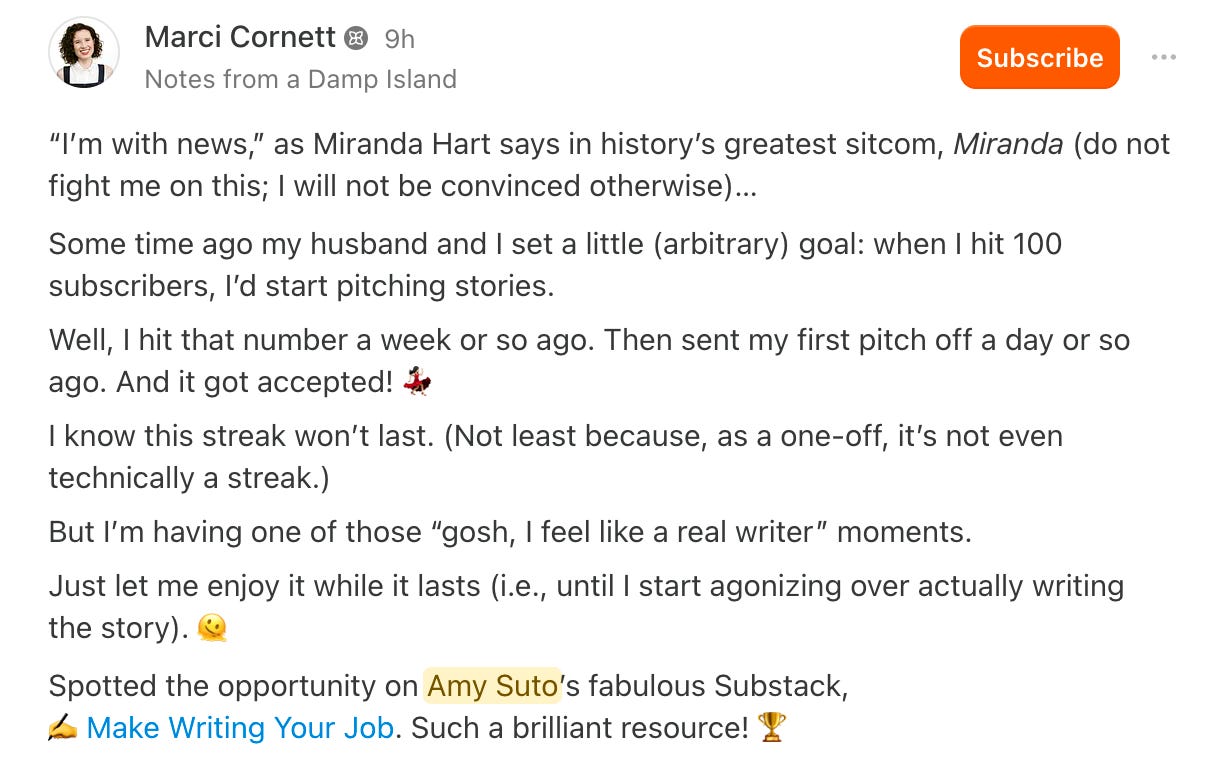
Plus, so many writers in 2025 (beginners and experts alike!) have landed real writing work from our board — we’re so glad you’re here!
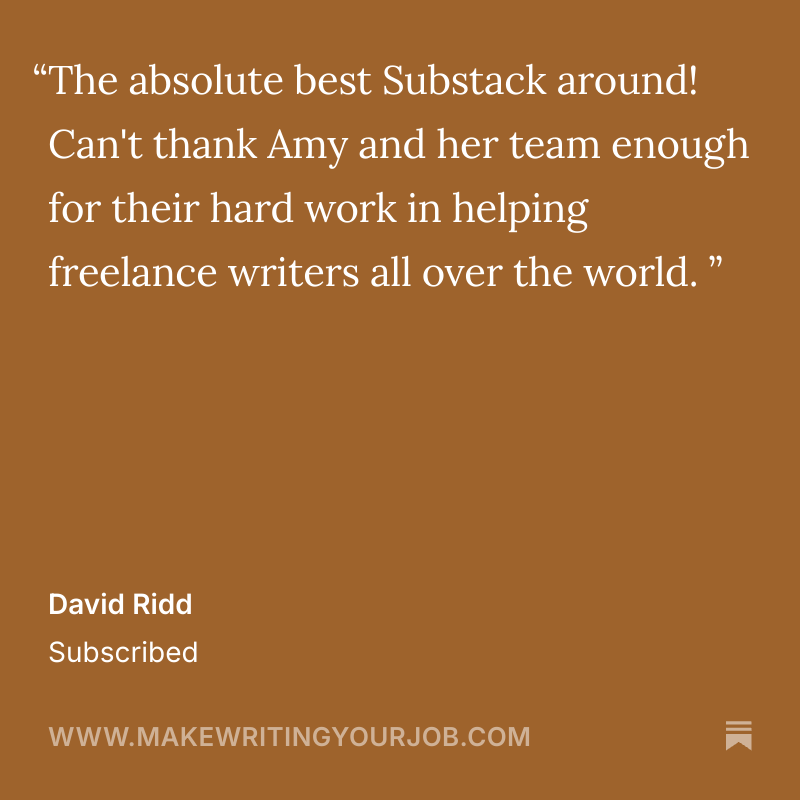
So yes: even if you’re new, you can make writing your job in 2026.
Not by hunting for a perfect beginner job, but by becoming the kind of beginner people want to hire.
You Don’t Have to Get Paid to Put Together a Great Writing Portfolio
Your writing portfolio doesn’t have to be created from paid assignments — you can create samples even before you get your first paying client or land your first pitch.
So if you want to be a developmental editor, don’t apply to a job listing saying, “I’ve never done a developmental edit.”
Do this instead:
Ask a friend (or a writer you know) if you can developmental edit something for free or low cost.
Do one or two edits.
Turn it into before/after samples + a short “here’s what I changed and why.”
If you want to be a memoir ghostwriter:
Write the first chapter of either your memoir or someone else’s. (Not to publish. To demonstrate range.)
Write “Chapter One” for a founder you admire and send it to them.
Or write a short story or personal essay that shows your range and mastery over storytelling.
If you want to write brand newsletters:
Pick a brand you love and write three “spec” issues.
Include subject lines, intro hooks, and a CTA.
Show you understand tone, audience, and rhythm.
Building a great portfolio is the “beginner” work now — but even expert writers benefit from returning to their portfolio.
So that’s why you don’t see a lot of “entry-level jobs.”
Instead, you need to create entry-level proof in the form of a great writing portfolio.
❓ Still not sure where to start? Watch our portfolio class now:
![✍️ How to Build a Portfolio That Attracts High-Paying Clients [REPLAY]](https://substackcdn.com/image/fetch/$s_!2tqU!,w_140,h_140,c_fill,f_webp,q_auto:good,fl_progressive:steep,g_auto/https%3A%2F%2Fsubstack-post-media.s3.amazonaws.com%2Fpublic%2Fimages%2F8966d891-58f3-43ba-adb6-f377889f2609_1328x885.png)
Limiting Beliefs Are Keeping Writers From Getting Paid to Write — Let’s Change That
If you’ve been waiting for a beginner job to “start”… you’ve been waiting for the old world. This world asks something different:
Begin first. Get paid second.
And yes — starting first is uncomfortable. It requires you to act like you belong before you fully feel like you do. But that’s how basically everything works.
You don’t wait until you’re asleep to get into bed. You get into bed, close your eyes, and practice sleep… until sleep arrives. You assume an identity or state of being first, and then it arrives.
So if you’ve been telling yourself, “I’m too much of a beginner to make writing my job,” I want you to swap that sentence with something more useful:
“I’m going to become undeniable — and have the writing life of my dreams this year.”
Then build the proof.
We’ll keep curating the best, high paying work we can find on our writing job board — the kind of writing work that’s actually satisfying, actually creative, actually worth doing.
And you?
You don’t need to find the perfect “beginner job.”
You just need to begin.
hugs,
-kyle
This is so eye-opening! And honestly, it seems more attainable. At the end of the day, does anyone care if you're a beginner if you can produce the work they need?
wow, this is excellent & a great perspective for both writing or doing anything as a beginner too! i can see this applying to people who are looking for "entry level" jobs in many industries as my career has mainly been in career strategy & intentional lifestyle design so far. thank you for this!!