



One of the most common questions we hear at Make Writing Your Job is simple — and notoriously unclear:
💰 “What are writers really getting paid and where are they finding their clients?”
So in December 2025, we asked.
This report shares a clear snapshot of pay, pricing structures, and career patterns based on over 100 anonymous responses from working writers and editors in the ✍️ Make Writing Your Job community.
This real-world data from writers actively earning in today’s market.
📖 How to Read This Report
To keep the focus on patterns rather than precision, all charts and visuals are shown as percentage distributions, not raw counts or exact dollar figures.
Use this report as a reference point, not a rulebook.
Note: This survey focused on rates and pricing structures, not total annual earnings.
👀 What Writers Responded
Experience levels skewed mid-to-late career.
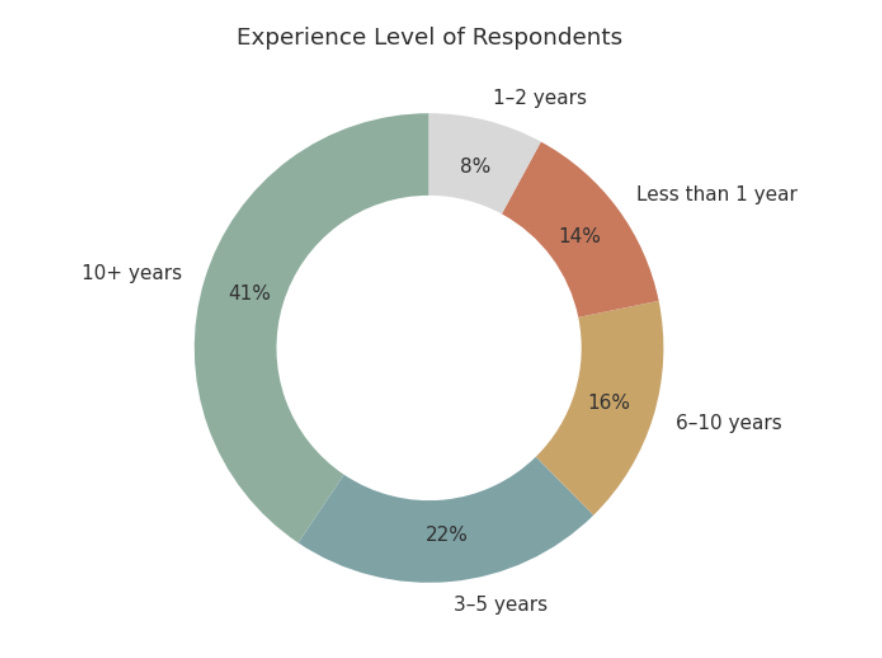
What this shows:
Most respondents had 6+ years of experience
The largest segment reported 10+ years in writing or editorial roles
Early-career writers were represented, but did not dominate the data
Why this matters:
This snapshot reflects people who’ve been in the work long enough to test rates, change strategies, and learn what actually sticks — making the patterns in this report especially useful for writers thinking beyond entry-level pricing.
🌍 Where Our Writers & Editors are Based
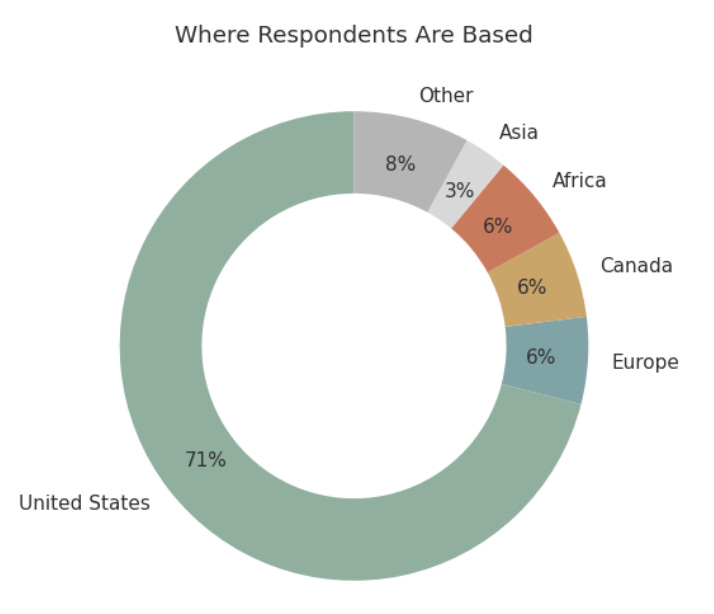
The majority of respondents were based in the United States
Writers and editors from Europe, Canada, Africa, and Asia were also represented
A small share fell into other regions
🧲 Where Writers & Editors Found Clients in 2025
When asked how they sourced work in 2025, respondents pointed to a mix of inbound, outbound, and relationship-driven channels — including referrals, repeat clients, pitching, and job boards such as our job board here at ✍️ Make Writing Your Job.
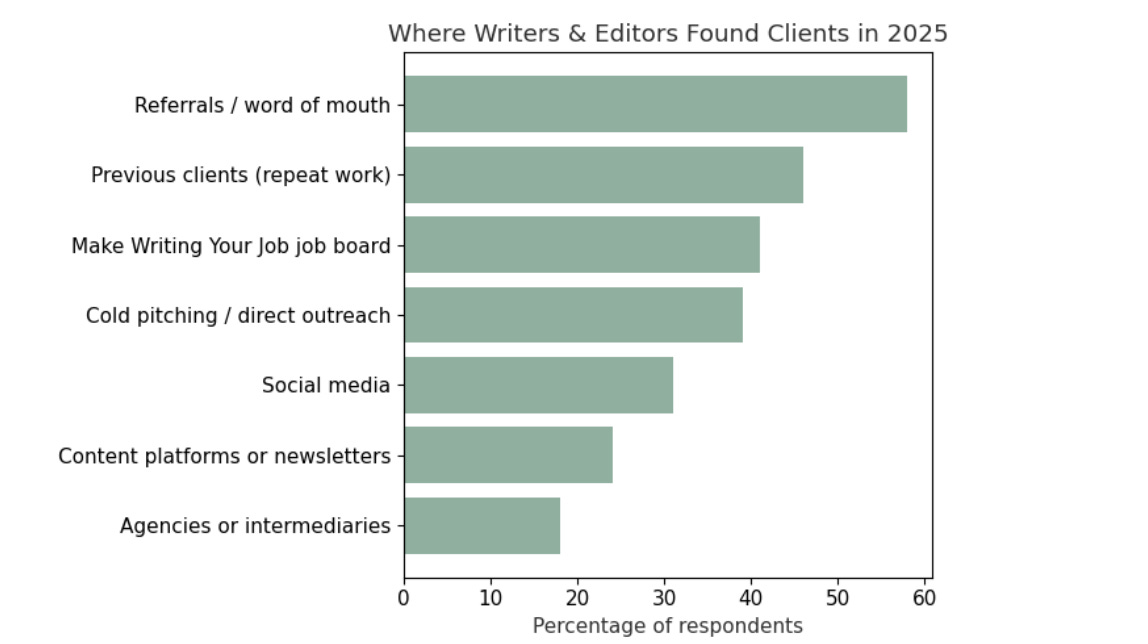
Most common sources included:
Referrals / word of mouth
Previous clients returning with new work
Our job board here at ✍️ Make Writing Your Job
Cold pitching or direct outreach
Social media
Content platforms or newsletters
Agencies or intermediaries
Key pattern:
Relationship-driven work (referrals + repeat clients) consistently outperformed any single platform or tactic.
Why this matters:
While job boards and pitching still matter, long-term rate growth and stability were most often tied to relationships, reputation, and visibility over time — not constant prospecting alone.
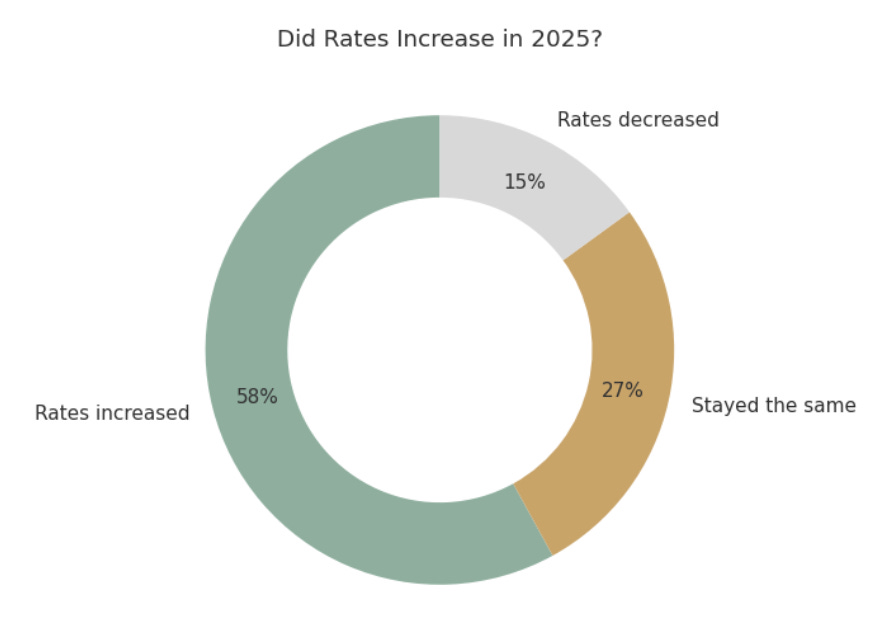
📈 Did Writing Rates Increase in 2025?
💸 For a majority of writers, their rates increased in 2025.
Many reported that their rates increased in 2025, while others stayed the same or declined.
Important context:
Rate growth wasn’t universal — but it was common enough to point to real leverage opportunities. Writing continues to be a valued skill by clients.
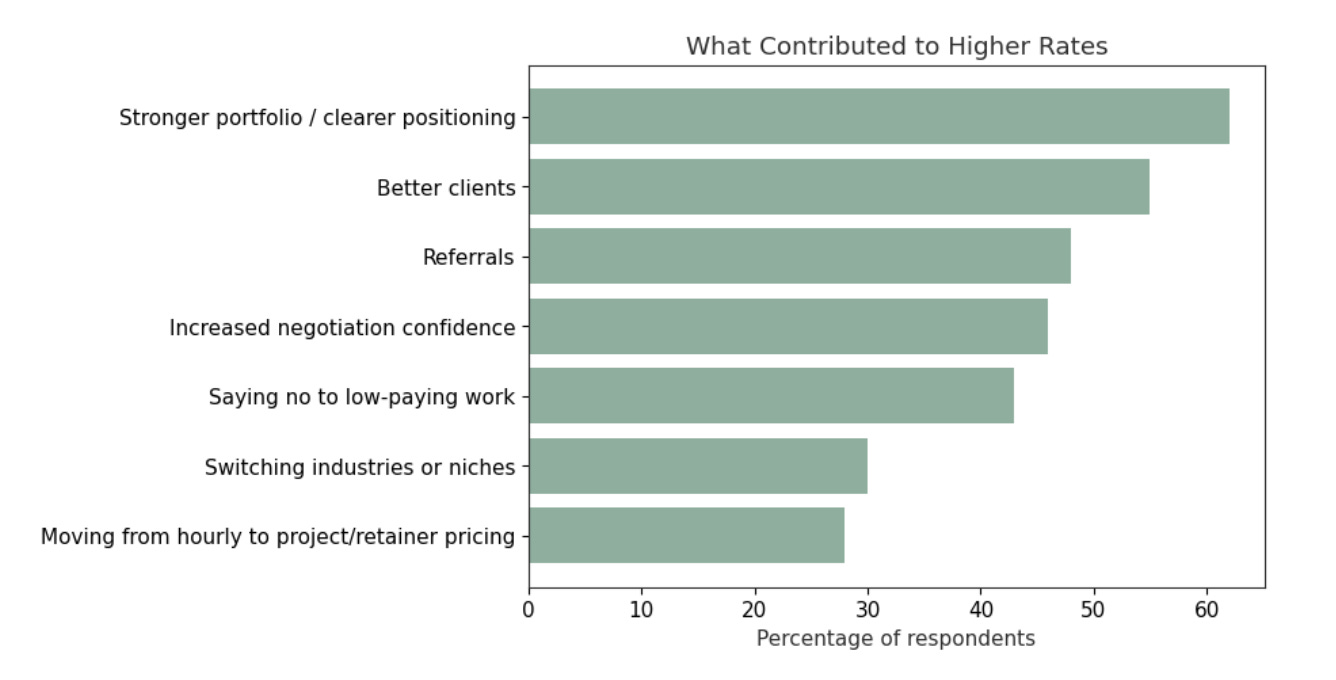
🔑 What Contributed to Higher Rates for Writers
When respondents who raised rates were asked why, the most common factors were:
Stronger portfolio or clearer positioning
Better clients
Referrals
Increased negotiation confidence
Saying no to low-paying work
Switching industries or niches
Moving from hourly to project or retainer pricing
Why this matters:
Rate growth was more often tied to positioning and boundaries than working more hours.
👥 How Many Paying Clients Writers & Editors Worked With in 2025
Most respondents were not relying on a single client — but they also weren’t juggling dozens.
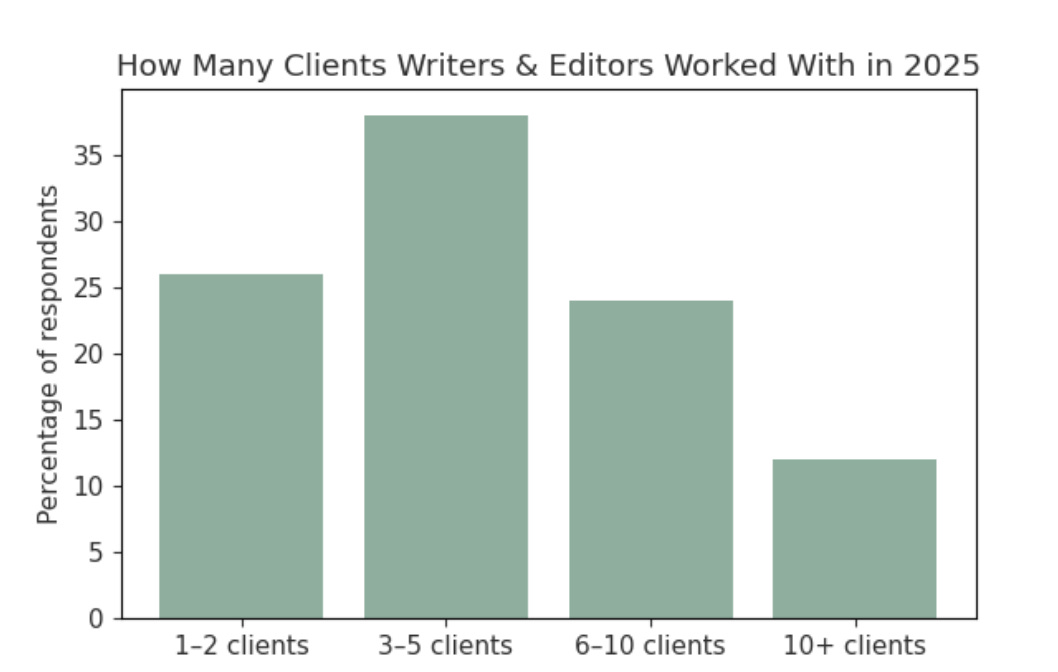
What we saw:
A large share worked with 3-5 clients over the course of the year
Another significant group worked with 1-2 core clients
Fewer respondents reported managing 10+ clients
What this tells us:
Sustainable income for many writers and editors came from a small, repeatable roster, not constant churn.
Why this matters:
More clients didn’t automatically mean higher pay. In many cases, fewer, better-aligned clients correlated with higher rates and more stability.
🏢 Industries Writers & Editors Worked In During 2025
Respondents reported working across a wide range of industries — with a clear concentration in a few key sectors.
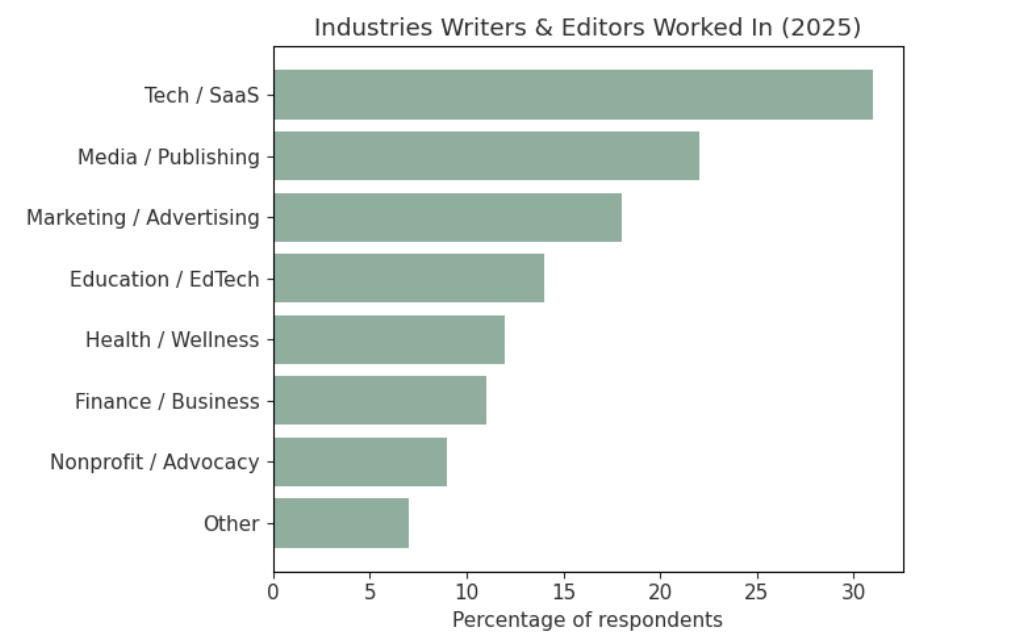
Most common industries included:
Tech / SaaS
Media & publishing
Marketing & advertising
Education / EdTech
Health & wellness
Finance & business
Nonprofit & advocacy
What stands out:
While tech and media led the way, but no single industry dominated the dataset.
Big takeaway:
Higher-paying work showed up across multiple industries — suggesting that positioning, scope, and client type mattered more than industry alone.
✍️ Types of Writing & Editorial Work in 2025
Respondents reported working across a wide range of writing and editorial roles in 2025. Most people were not doing just one type of work — many combined multiple formats and responsibilities depending on client needs, scope, and opportunity.
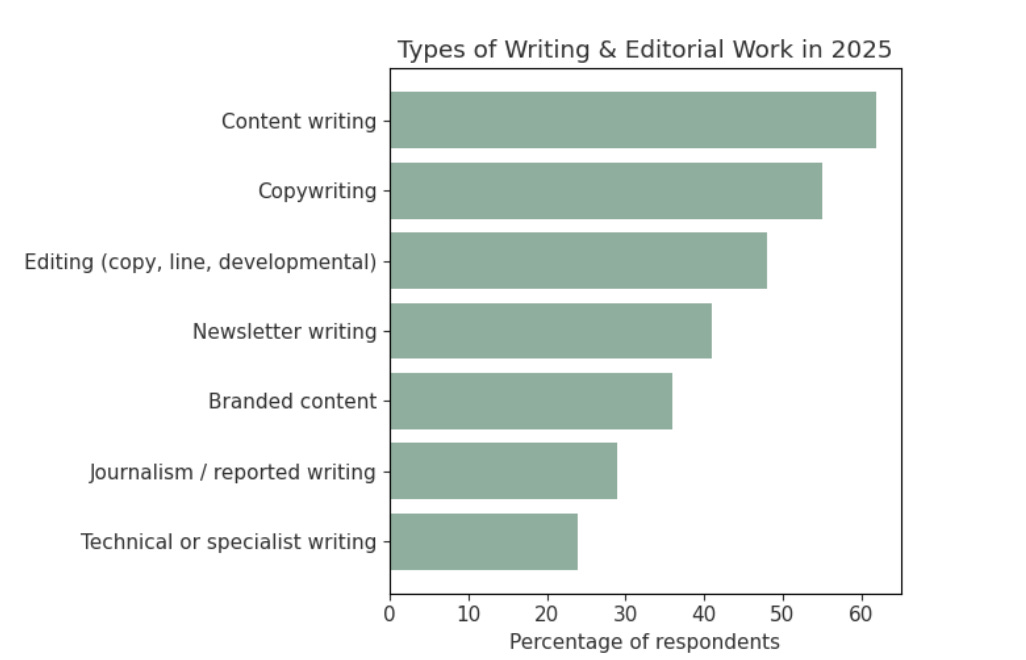
The most common types of work included:
Content writing/long-form writing and ghostwriting
Copywriting
Editing (copy, line, or developmental)
Newsletter writing
Branded content
Journalism or reported writing
Technical or specialist writing
Key pattern:
Versatility was common. Many respondents blended editorial, marketing, and specialized writing rather than operating in a single lane.
Why this matters:
Rates and pricing structures often varied by type of work, not just experience level — making role clarity an important lever for earning more.
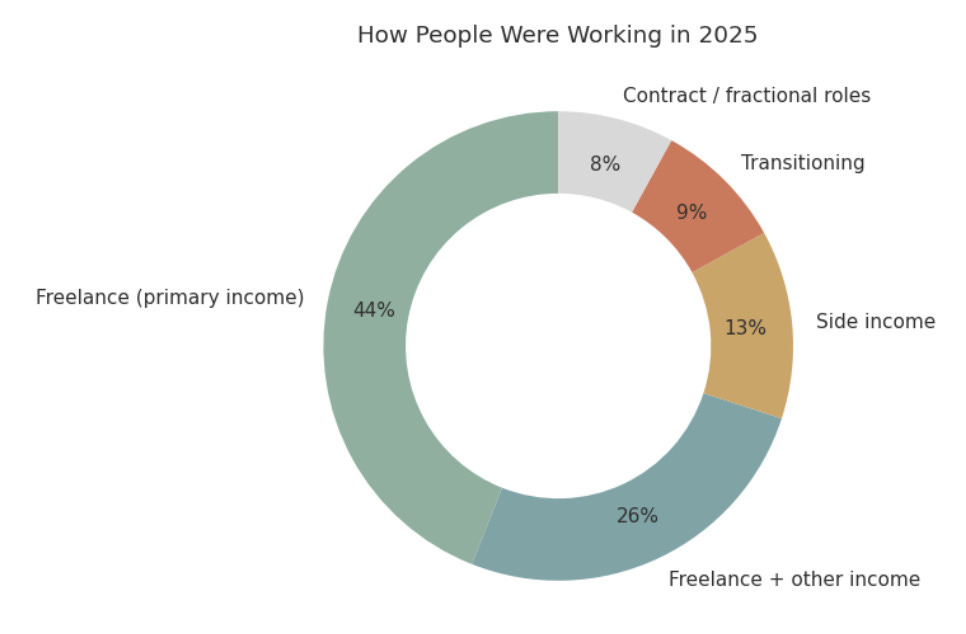
💼 How Writers Were Working in 2025
Freelance dominates — but rarely in isolation.
Respondents described a wide mix of work structures:
Freelance writing/editing as a primary income source
Freelance combined with other income streams
Writing/editing as a side income
Full-time employed roles
Transitional phases between career stages
Key pattern:
Very few people rely on a single, static setup. Most income paths were hybrid or flexible, even when freelance was the core.
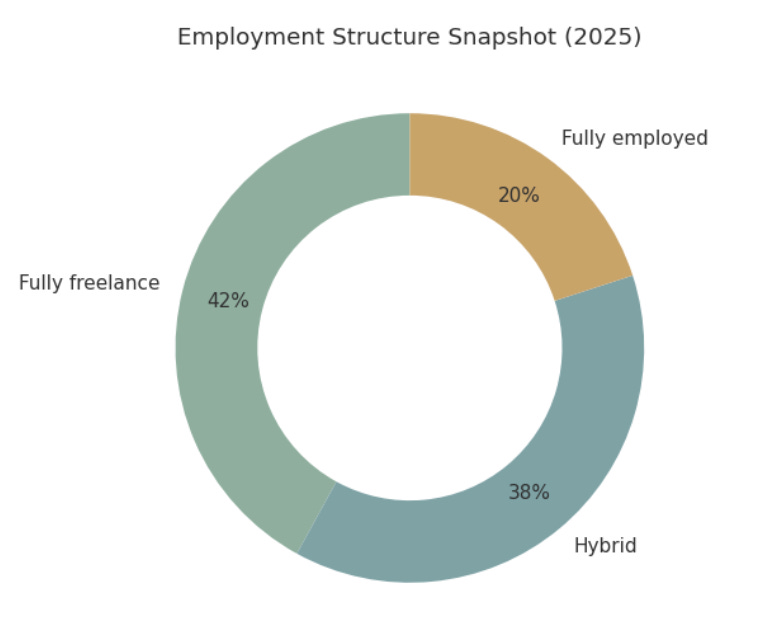
🏗️ Writing Employment Structure Snapshot
When grouped more broadly, respondents fell into three main buckets:
Fully freelance
Hybrid (freelance + employment or other income)
Fully employed
Takeaway:
Hybrid work structures are common — and often intentional.
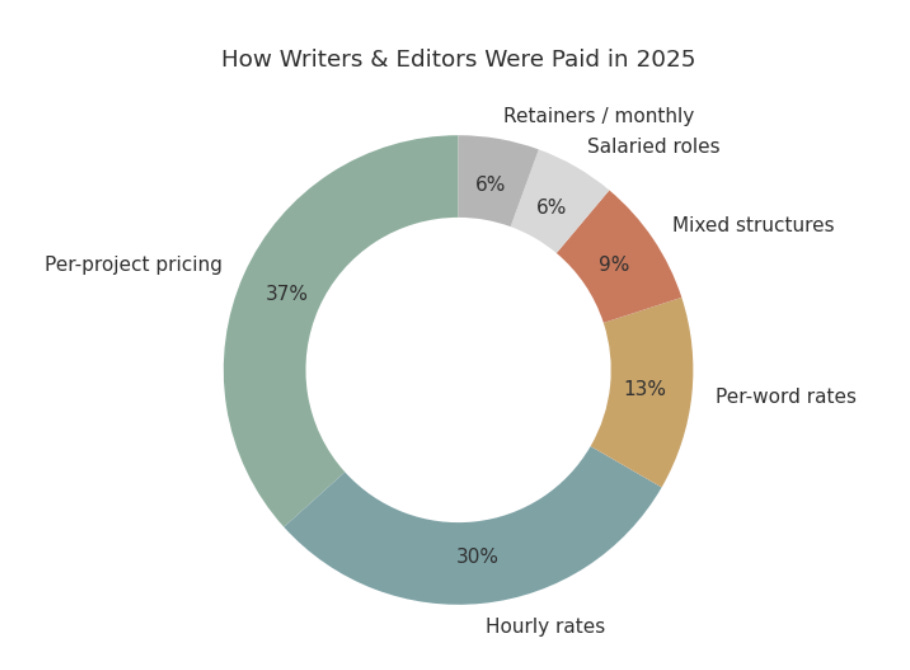
💰 How Writers & Editors Were Paid
Project pricing leads the way.
Across the board, respondents reported being paid via:
Per-project pricing
Hourly rates
Per-word rates
Salaried roles
Retainers / monthly contracts
Mixed or varied structures
The most common model:
➡️ Project-based pricing, followed by hourly and mixed approaches.
This aligns with broader market shifts toward value-based work.
🔄 Pricing flexibility is the norm.
Many respondents didn’t rely on just one pricing structure.
What this tells us:
Writers and editors often adapt pricing to the work — not the other way around.
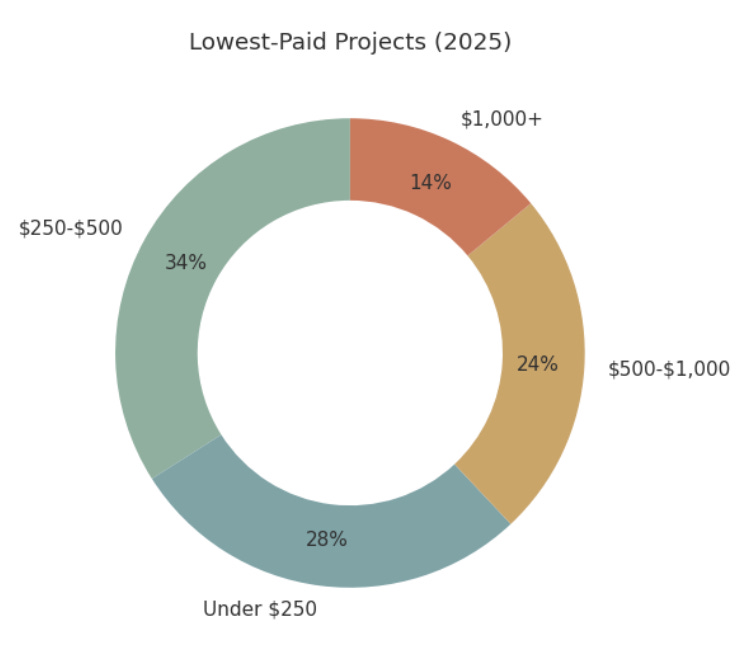
🧾 The Low End: Lowest-Paid Writing Projects
Respondents reported accepting a wide range of low-end project rates in 2025.
What this highlights:
Pay floors vary dramatically
Underpricing still exists at every experience level
Many respondents described low-paid work as temporary, strategic, or transitional
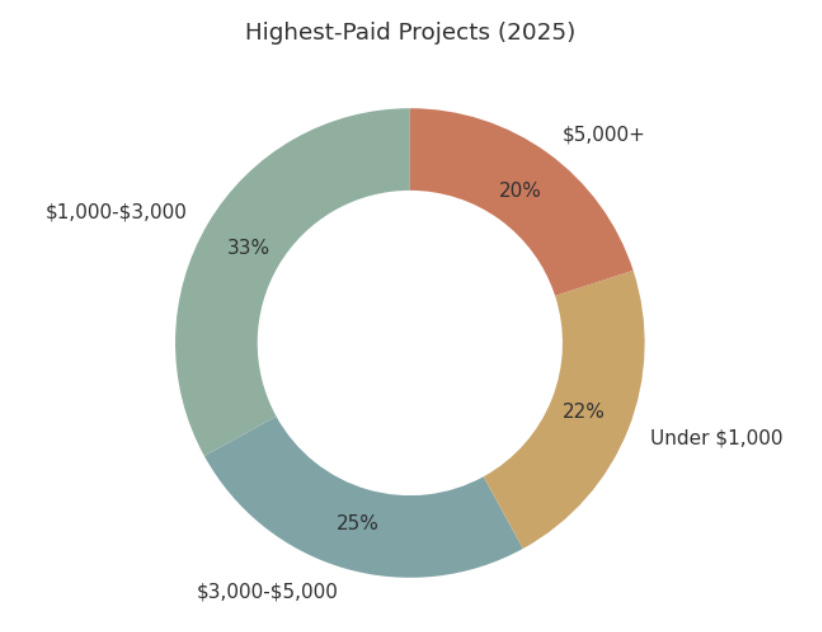
🧾 The High End: Highest-Paid Projects
On the flip side, many respondents completed multi-thousand-dollar projects, with a notable share reporting high-value work well above early-career benchmarks.
Takeaway:
High-paying writing and editorial work does exist — but it’s unevenly distributed and often tied to niche, client type, and scope.
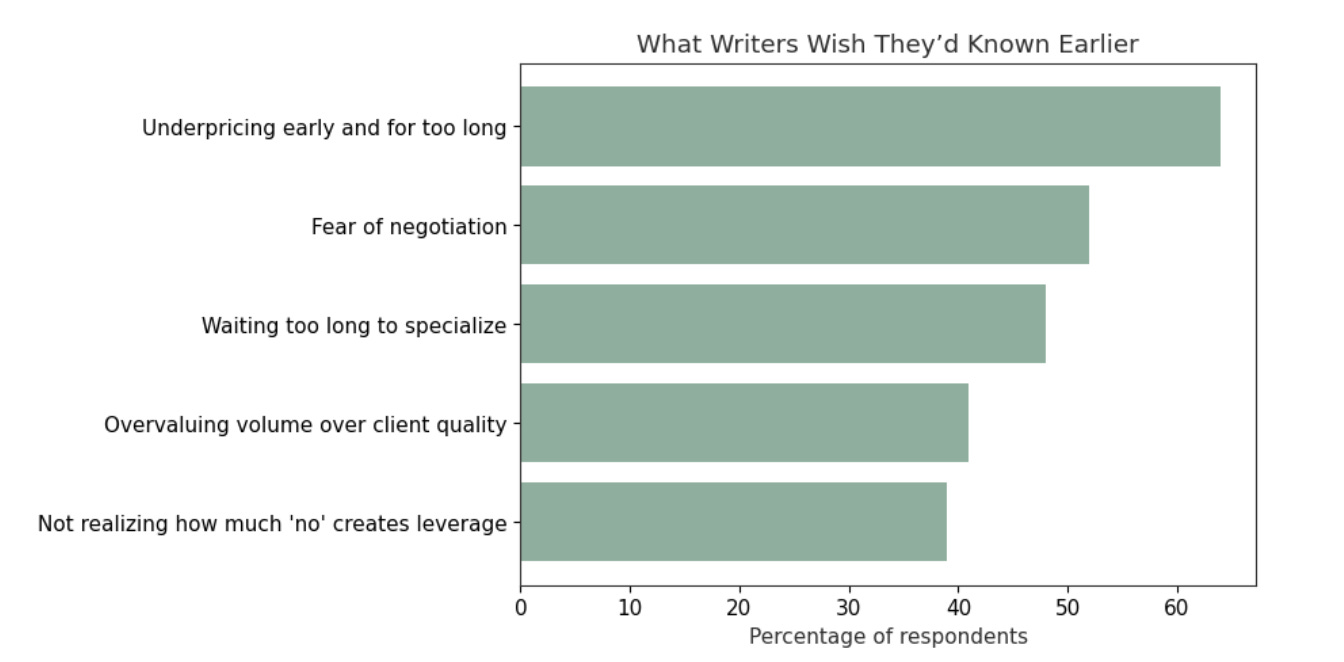
🤔 What Writers Wish They’d Known Earlier
When asked what they wish they’d understood sooner about rates or pricing, common themes emerged:
Underpricing early and for too long
Fear of negotiation
Waiting too long to specialize
Overvaluing volume over client quality
Not realizing how much “no” creates leverage
These lessons showed up again and again — across experience levels.
🚫 What This Data Does Not Say
❌ This isn’t a universal standard
❌ It won’t tell you what you “should” charge
❌ It can’t replace negotiation, context, or judgment
What it does offer is something more useful: real-world perspective, fewer blind spots, and clearer signals about what’s possible.
🧭 How to use this report
Use this data to:
Sanity-check offers before you say yes
Benchmark your current rates against the broader market
Spot where experience, scope, or complexity may be underpriced
Make more intentional decisions about which work to pursue — and which to walk away from
Get inspired to jump into 2026 knowing that writing is a growing market
Think of it as a map, not a mandate.
🔁 What’s Next
If you thought that the work we did to put together this report was valuable, please considering sharing this post.
We plan to run this survey again in late 2026.
As the dataset grows, the picture gets clearer — trends sharpen, patterns deepen, and blind spots shrink. If you didn’t participate this year, we hope you’ll add your voice next time.
Have a great New Year and happy writing!
-The Make Writing Your Job Team
p.s. shout out to our team member Michelle Rose here at Make Writing Your Job who spearheaded this report and initiative!
This was such an interesting breakdown, thank you for sharing!!
Very cool! Some of these results definitely surprised me. Given there are so many newer freelancers here in the MWYJ community, I'm especially curious to see a followup in which some basic trends are pulled from the "less than 1 year" and "1–2 year" respondents.