


📚 Editor’s Note: The Part Most Writers Miss
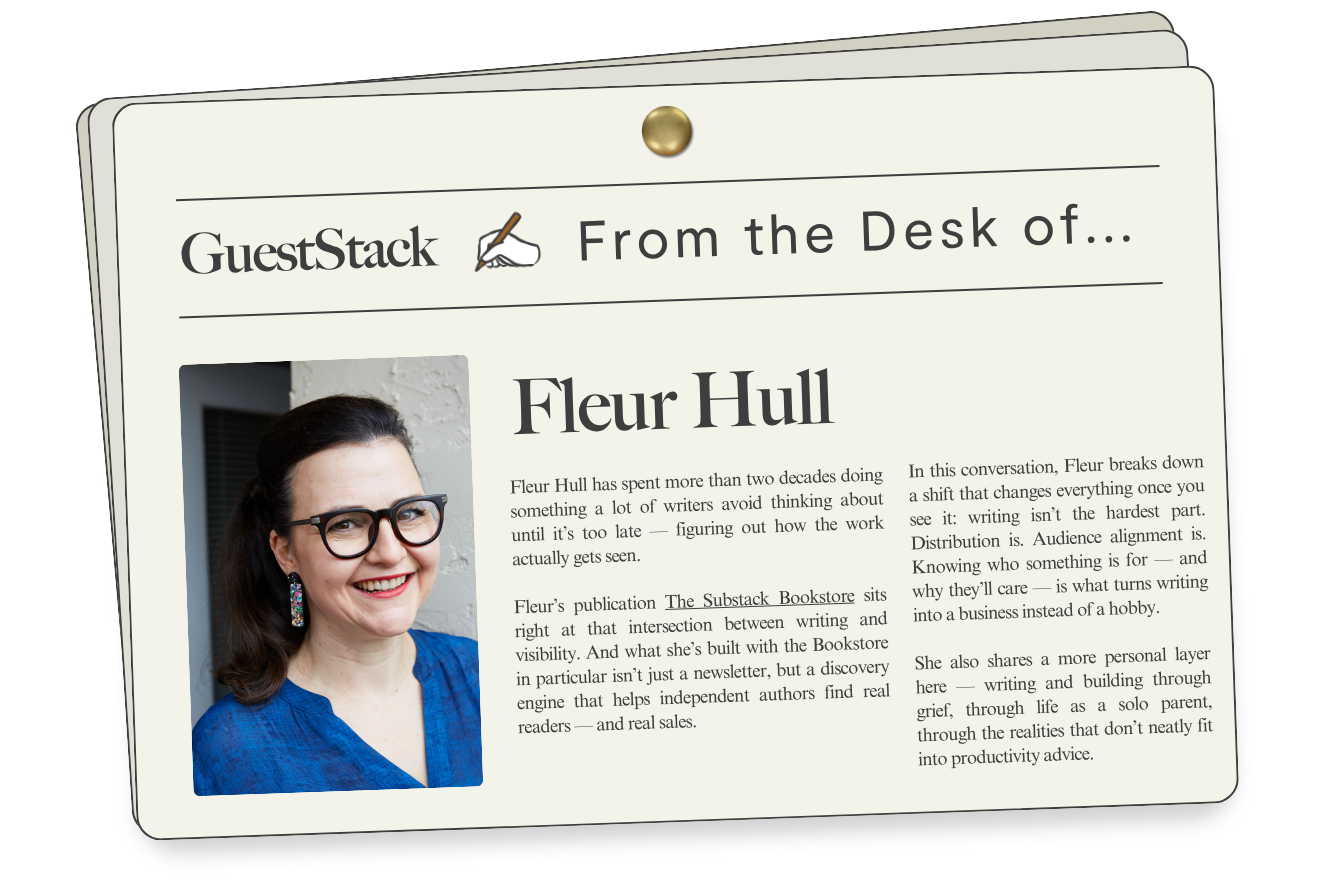
Fleur Hull has spent more than two decades doing something a lot of writers avoid thinking about until it’s too late — figuring out how the work actually gets seen.
Fleur’s publication The Substack Bookstore sits right at that intersection between writing and visibility. And what she’s built with the Bookstore in particular isn’t just a newsletter, but a discovery engine that helps independent authors find real readers — and real sales.
In this conversation, Fleur breaks down a shift that changes everything once you see it: writing isn’t the hardest part. Distribution is. Audience alignment is. Knowing who something is for — and why they’ll care — is what turns writing into a business instead of a hobby.
She also shares a more personal layer here — writing and building through grief, through life as a solo parent, through the realities that don’t neatly fit into productivity advice. It’s a reminder that a writing career isn’t built in perfect conditions. It’s built in the middle of everything else.
If you’ve ever felt like you’re doing the work but not getting the traction, this one will sharpen how you think about what happens after you hit publish.
– Amy Suto
Editor & Curator of GuestStack
✍️ From the Desk of Fleur Hull
Where’s your desk these days — and what does it look like?
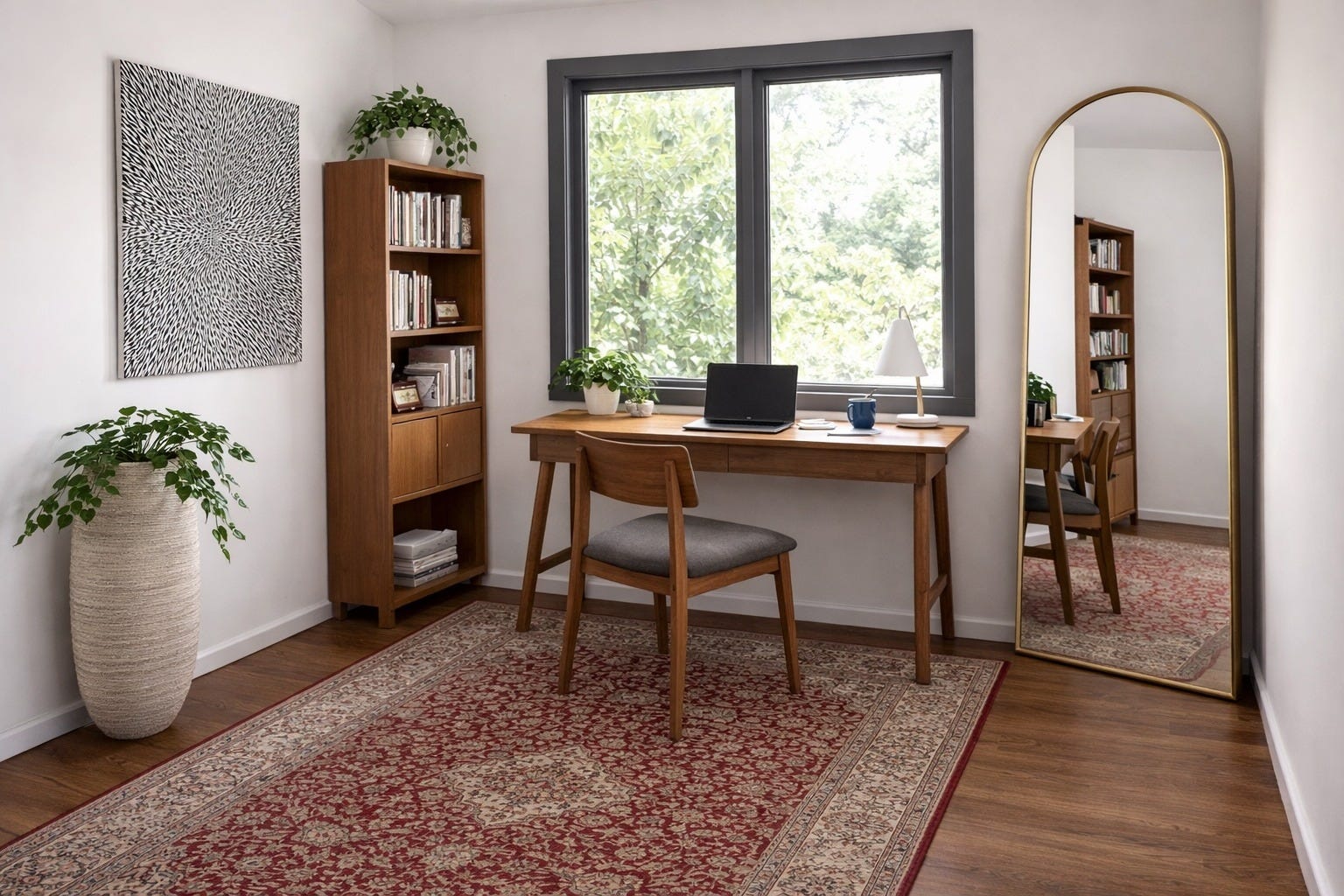
I write from my study in the Western Suburbs of Perth, Western Australia, just 500m from the Indian Ocean. I write beneath Bush Medicine Dreaming by Australian Indigenous artist, Gloria Petyarre, which I bought years ago. It has this hypnotic, inward pull, like everything is in motion but also exactly where it needs to be. It’s a surprisingly good companion for writing.
Your publication and community, The Substack Bookstore, is such a special space for indie authors. Can you share a bit more about it and what inspired you to start it?
I had helped dozens of author clients get started on Substack and was very late to the party when I started my Book Marketing Substack, Author Growth in March 2025. As it grew I kept getting asked by indie authors about featuring their books, and so in July 2025, I launched The Substack Bookstore. I had been a long-time lurker on the self publishing sub-reddits and this helped me to see how hard it was for self-publishing authors to get eyes on their books. I wanted to create a community of authors and readers that supported each other, especially at launch time. The idea took off with 1600 free subscribers joining in the first three weeks. I became a Substack bestseller within seven weeks of the launch of the Bookstore and during that time we had three authors reach Amazon category bestseller thanks to the support of the Bookstore community.
What does “making writing your job” look like in your world right now?
I majored in Marketing in my Economics undergraduate degree and went on to do a Masters in Marketing, so I had always thought of myself as a marketer first and foremost. Once I started on Substack and reflected on my career, I realised I had been a writer and editor in all of my jobs since graduation; more than 25 years of writing experience and over $2m in earnings from my work during this time. I think that was the biggest surprise - realising that I’d been earning as an author for more than two decades.
Today I make money from my Substack publication subscriptions, from my consulting work helping authors and from royalties from the five non-fiction books I’ve published under various pen names.
What’s one lesson you wish someone had told you earlier about the business of writing and publishing?
That writing is not the hardest part - finding an audience and marketing it is. I spent a lot of time thinking about the craft of writing, which is important of course. And I always had my marketing brain on, but marketing creative work is very different from the work I did writing and marketing in not-for-profits and for startups.
I got caught up thinking that the size of the audience was the key to getting creative work seen and purchased. Now I see that it’s the quality of the audience that often plays a bigger part - the alignment between what they’re seeking from a book or an article and what one has to say.
What’s your writing or creative routine like — or do you even have one? How do you get inspired to work on your Substack or pursue other creative projects?
I’m diagnosed with inattentive ADHD and my medications kick in once my children leave for school each weekday. I do my best work between 9am and lunch time, then use the afternoons and some time on the weekend to expose myself to ideas through reading and listening to podcasts.
As a solo parent, I get three weeks away from my gorgeous (and AuDHD) kids each year, and try to use these weeks to work on any book projects I’m working on. It’s the only time I can really get into the deep work required to write a long piece of writing.
Was there a moment you realized, “Wait… I can actually do this”?
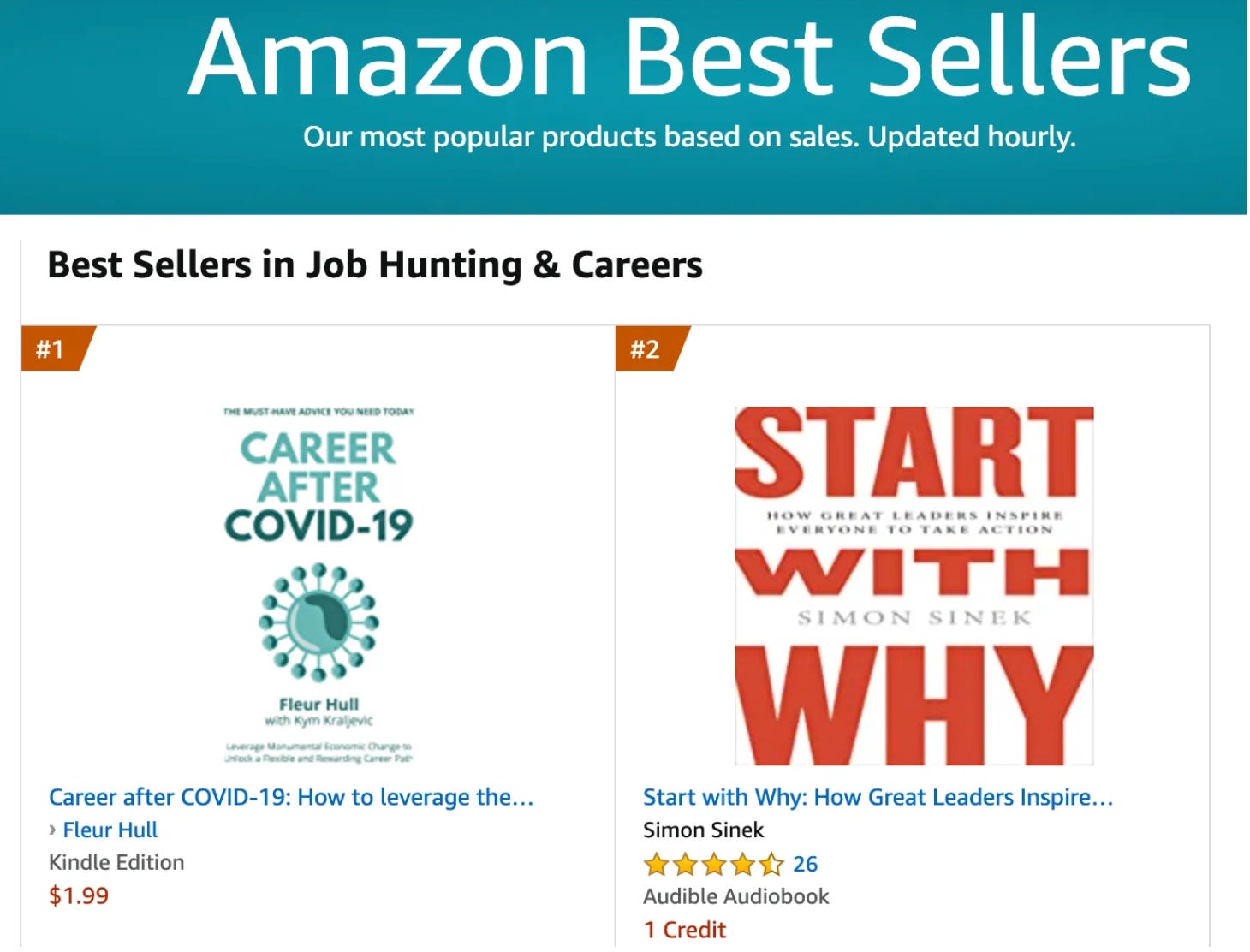
Getting my first book, Career after COVID-19, to Amazon bestseller within days of its release at the end of 2020, outselling Simon Sinek for a few days, was a definite turning point in my confidence about my writing.
In terms of Substack, reaching bestseller within seven months of starting, was another sign from the universe that I was on the right track with the publications I had started. When authors started getting visibility, subscribers, and sales through The Substack Bookstore, I realised I wasn’t just writing, I was building something that had leverage.
That’s when it shifted from “this might work” to “this is a model”.
What’s something you tried that didn’t work — and what did you learn from it?
Trying to scale too many offers at once. At one point I had seven Substacks, different pricing tiers, services layered on top of each other: all individually reasonable, but collectively confusing.
What I learned is that clarity converts more than optionality. Writers need a clear path: what do I do next, and why does it matter?
Now I build much more deliberately. Fewer offers, stronger positioning, and a clear role for each piece of the ecosystem.
How do you find or create opportunities for yourself as a writer/Substack creator?
When I started on Substack, I did all the usual things like engaging with other creators, commenting thoughtfully and so forth. I also helped authors out for free with simple things like cover or blurb feedback. They all kindly posted about what I’d done and tagged me, increasing my exposure across the platform. I still try to help out authors without charging, when I can.
My big break came when Kristina God, founder of The Online Writing Club, who I had been following, reached out to me for a collaboration in July 2025, which helped me get exposure to her 25k+ audience, and massive growth for my publication followed.
What’s the best investment you’ve made in your writing life (time, money, or energy)?
Learning how to think strategically about my (or my clients’) audience and their attention has been my best investment in my writing life. Knowing their pain points and motivations is key to communicating well, in my humble opinion.
The Substack Bookstore is a bestselling publication here on Substack — what were the ways you grew it? Anything out of the ordinary, or surprising to you?
Two things made the biggest difference:
1. Treating it as a discovery engine, not a newsletter
It’s structured for search, for sharing, for long-term visibility, not just for the next send.
2. Making it about the authors, not me
The more value it creates for other writers, the more it grows. That sounds obvious, but it’s surprisingly rare in practice.
As I mentioned above, collaboration opportunities also formed the basis of growth. Kristina God’s involvement was the key to the major early growth of The Substack Bookstore.
What’s something you’re currently obsessed with — and how is it influencing your writing or creative work?
Sadly, my mother died on 27 April and her decline from terminal mesothelioma and my desire to spend as much time with her as possible has been my obsession since January this year. I suppose I am currently fascinated by the process of grief - both anticipatory grief and the acute grief of the loss of someone as beloved as my mother. I’m finding that reading others’ stories of loss on r/griefsupport has been helping me with my early healing.

👋 About Fleur Hull, This Week’s Featured GuestStack Writer
Fleur Hull is the founder of The Substack Bookstore, a discovery network connecting hundreds of independent authors and books with thousands of readers. After 25 years in writing, marketing and publishing (and turning her own book into an Amazon bestseller) she now helps experts and authors build books that don’t just exist, but get discovered.
