


📚 Editor’s Note: Letting Go of Metrics — and Grudges
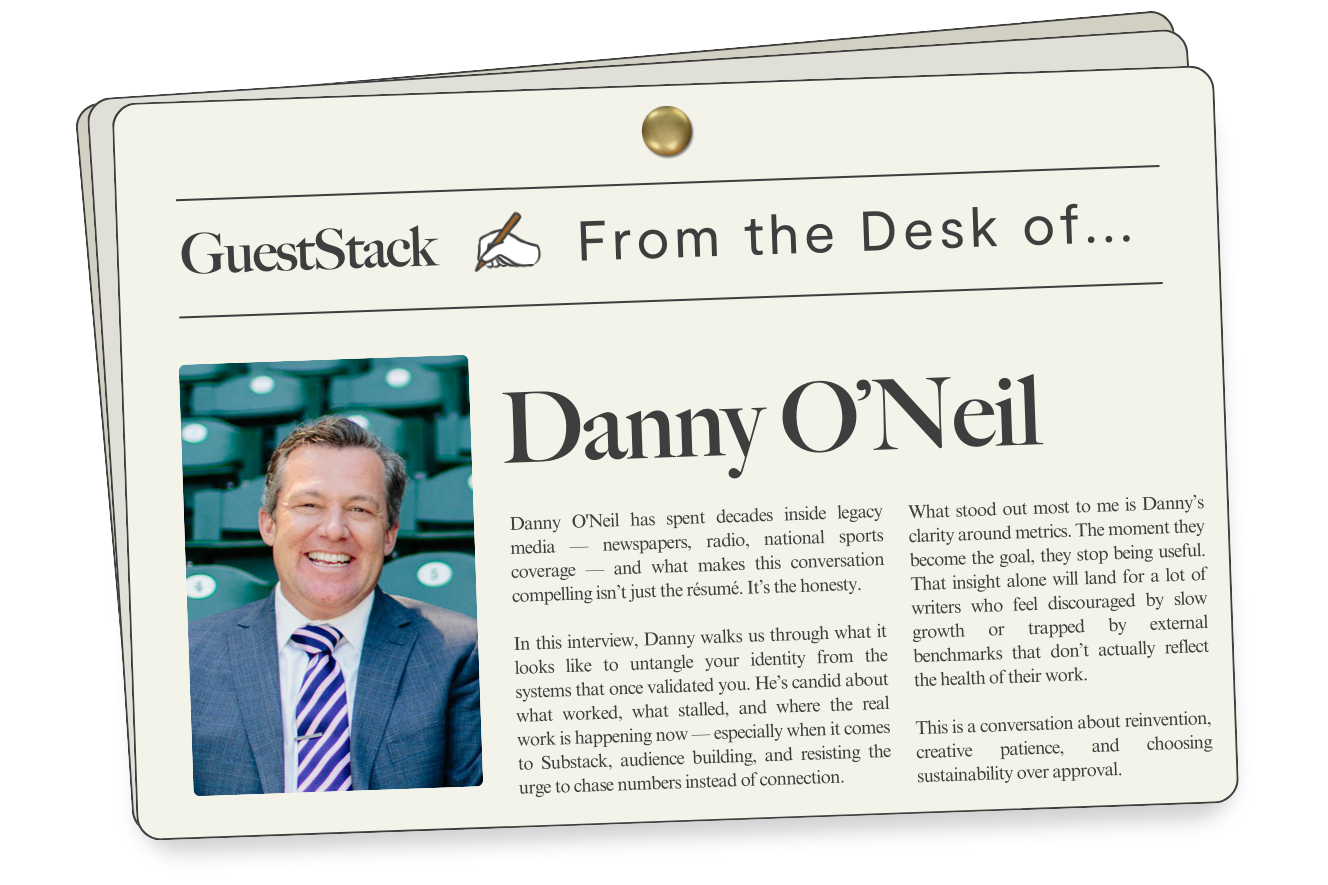
Danny O'Neil has spent decades inside legacy media — newspapers, radio, national sports coverage — and what makes this conversation compelling isn’t just the résumé. It’s the honesty.
In this interview, Danny walks us through what it looks like to untangle your identity from the systems that once validated you. He’s candid about what worked, what stalled, and where the real work is happening now — especially when it comes to Substack, audience building, and resisting the urge to chase numbers instead of connection.
What stood out most to me is Danny’s clarity around metrics. The moment they become the goal, they stop being useful. That insight alone will land for a lot of writers who feel discouraged by slow growth or trapped by external benchmarks that don’t actually reflect the health of their work.
This is a conversation about reinvention, creative patience, and choosing sustainability over approval — with plenty of hard-won wisdom along the way.
– Amy Suto
Editor & Curator of GuestStack
✍️ From the Desk of Danny O'Neil
Where’s your desk these days — and what does it look like?
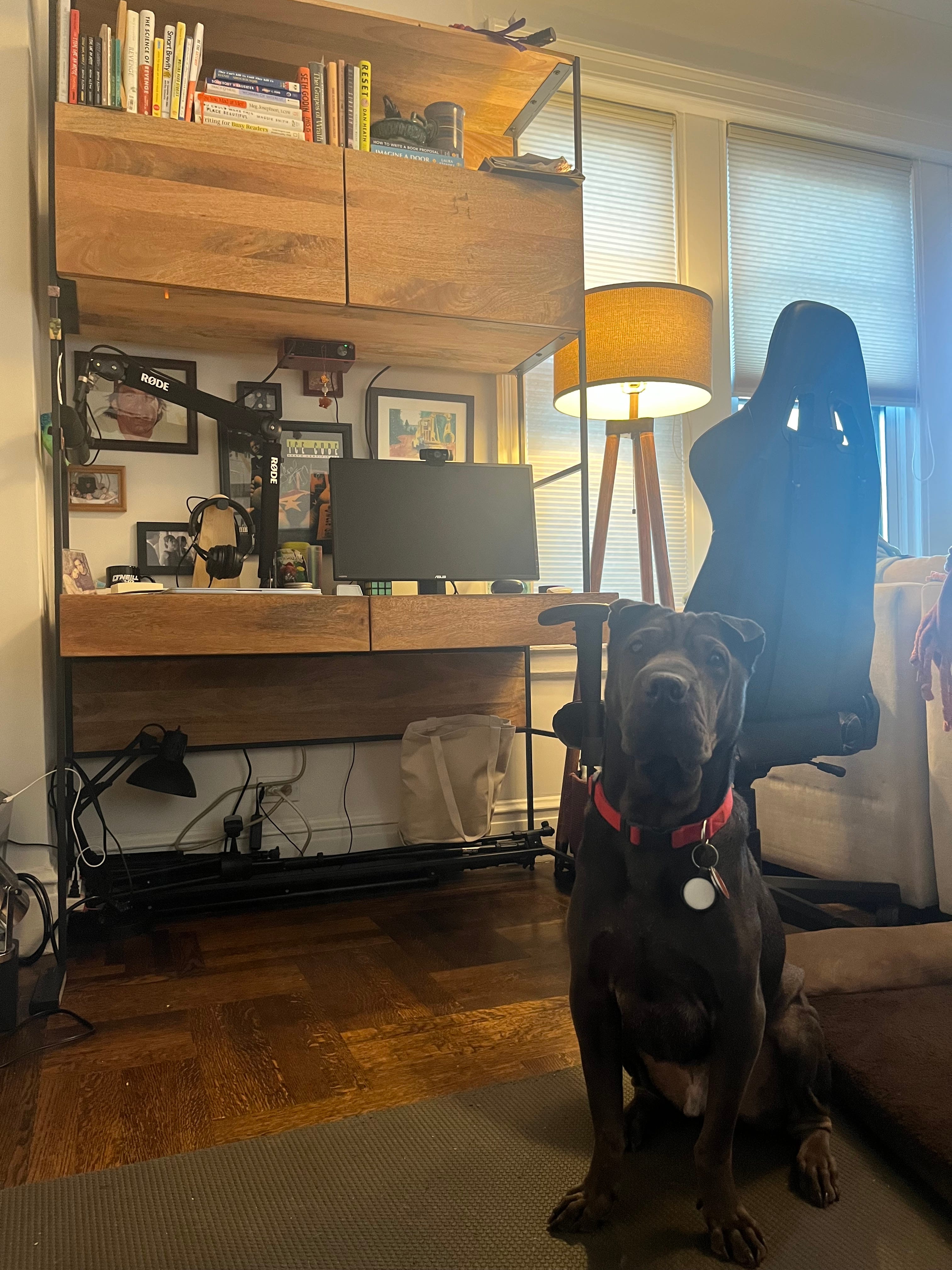
I live on the 10th floor of a pre-war building in Manhattan, and my desk is situated in the southwest corner of our living room, though Simba, our Shar-Pei, would say that I’m actually sitting in his bedroom. The desk is made of mango wood, which was surprisingly tough to drill through when I mounted a microphone arm. The desk has two drawers and two overhead cabinets. If I look to the right, I can see the Hudson River and New Jersey. If I look straight ahead, I see the album cover for Ice Cube’s “Death Certificate” which he signed “2 Danny, Stay Cool, Ice Cube.”
My favorite part of your bio is that you describe yourself as a “veteran journalist, an accidental radio host and a bona fide expert in grudges who recently experienced the blissful relief that comes from letting go.” I know this is part of the inspiration for your Substack Grudgery, which has a great essay about letting go of a 20-year Grudge. What’s been your journey creating Grudgery as well as your podcast The Dang Apostrophe?
My background is almost entirely in legacy media. Legacy sports media to be more specific. I started out as a newspaper reporter and worked my way up the food chain from covering high-school sports to the NBA and ultimately the NFL. Radio was a side gig at first, a way to broaden my skills and earn a little more money. Turns out, I’m also more of a ham than I thought and in 2013 I was hired as a radio host by the ESPN affiliate station in Seattle. I spent 14 years as a newspaper reporter in Seattle, eight as a radio host.
I started my first Substack “The Dang Apostrophe” in September 2021 which is when I left the radio station. By that time I was living in New York, having relocated after my wife took a job at the New York Times. I started the newsletter to stay connected to the audience I’d developed. I thought I’d test out stories and link to the various freelance pieces I was certain I’d be placing. Turns out, the freelance market for sports writing was (and still is) fairly dry, and selling subscriptions to my Substack has been a far better business plan than pitching freelance stories. I turned on paid subscriptions three months after I started the newsletter. In retrospect, I should have done that immediately. Today, the newsletter has 3,100 subscribers, just under 300 of whom are on one of the premium tiers. Currently, I run that newsletter through Beehiiv, but I’m considering moving back to Substack.
“Grudgery” is my second Substack and it’s part of my effort to write non-sports stuff. It’s related to the memoir I’m working on about the hostility I harbored against my stepfather for a good 20 years and (more importantly) how I finally processed those emotions. I actually interviewed him in December 2023, which was the first time I’d seen him in 18 years. (Spoiler: The resolution of the grudge had absolutely nothing to do with anything he said. In fact, my sense of closure came in spite of talking to him.)
If I’m being optimistic, I’d say “I’m still trying to figure out how to make ‘Grudgery’ work as a part of my writing business.” If I’m being more honest, I’d say, “I’m discouraged because it hasn’t been going as well as I hoped.” I need to re-establish a regular cadence, turn on paid subscriptions, rethink my content strategy and find ways to repurpose content as social-media marketing. Other than that, I’ve got it totally wired!
What does “making writing your job” look like in your world right now?
Right now, 80 percent of my income comes from coverage of Seattle sports. The sources of this income:
The Dang Apostrophe, newsletter published 2-3 times per week;
Three weekly podcast/radio segments that are paid appearances;
Bi-weekly column for the Tacoma newspaper;
A one-hour weekly college football podcast I co-host;
On the one hand, I’m very fortunate people in Seattle are still interested in what I have to say. On the other hand, I’ve been trying to write more non-sports content for a few years now and yet most of my income is still tied to the sports being played in a city where I no longer live. It’s been exciting to have a chance to re-invent what I do and I’m very fortunate to have this opportunity to do that. It has also been quite challenging.
In addition to “Grudgery” I’ve had a series of personal essays published in Seattle Magazine. I’ve also done some non-journalism copy writing for clients. My goal in 2026 is to make “Grudgery” part of my writing income and to explore the possibility of ghost writing.
What’s one lesson you wish someone had told you earlier about the business of writing?
Trying to write your way into a traditional book publishing deal in this economy is prohibitively difficult, especially a memoir. The number of gatekeepers in publishing has diminished while the number of aspiring authors has increased to the point that not getting ghosted is a huge win. Seriously. Someone taking the time to tell you “No thanks,” is a W. If the goal is publishing a book that will be part of an independent writing business – which is exactly what it is for me – then pursuing a traditional publishing deal is not a rational economic decision. It’s more about seeking acceptance and validation, which is a totally fine goal by the way. It’s just not my goal. At least not any more.
What’s your writing routine like — or do you even have one?
I’m a morning pages person. Three pages, hand-written though there are days when this is more like three-quarters of a page. When it comes to drafting columns/newsletter/book copy, I’m most efficient between 10 a.m. and 1 p.m. As an alternate-side parker here in New York (if you know, you know) I have three hours each week where I’m sitting in my car, typing on a Freewrite, while I wait for the street cleaner to come. Turns out, I’m very productive in this little writing cocoon especially now that the heater in our Subaru is fixed.
I schedule all of my “talking work” (i.e. podcasts, radio hits) in the afternoon. That’s also when I do what I think of as my “marketing work” i.e. social-media posts. A goal of mine in 2026 is to develop more concrete systems for social media as opposed to my seat-of-the-pants approach where I post what I’m thinking. Finally, I’ve found that between 9 p.m. and 10 p.m. is a good time for me to hand write outlines for what I plan/hope to write the next day. I try to be off any screen but the television by 9.
Was there a moment you realized, “Wait… I can actually do this”?
My first year covering high school sports at The Seattle Times in 1999. I was 25 and sent out to a small town in Washington – Moses Lake – where there was a high-school baseball player who was about to be a high pick in the MLB draft. Most of what I knew about writing at this point was intuitive. I didn’t understand the first thing about narrative structure. I spent 12 hours with this high-school baseball player and his family one Sunday and then went to a Travelodge and wrote a story that started with a scene about this 18-year-old kid – who was weeks away from receiving a signing bonus of $2.75 million – ordering a glass of milk with breakfast at the local country club. In retrospect, I wouldn’t say the story was good. However, it was my first glimpse of how much I enjoyed taking an experience and using literary tools to try and imbue it with meaning.
What’s something you tried that didn’t work — and what did you learn from it?
I would actually put “Grudgery” in this category right now. My goal was to use this newsletter as an author platform to help sell my memoir to a publisher. My rationale went something like this:
The No. 1 reason publishers pass on non-fiction books is author platform;
I’ll make Grudgery a platform that shows I have an audience that will buy this memoir even though I’m not a famous person.
I knew I needed thousands of subscribers to register on a publisher’s radar. After a couple of months of (fairly) consistent posting, I didn’t have thousands of subscribers. I had a couple hundred. Instead of focusing on building from that base, I wound up feeling defeated because the goal felt too far away.
Here’s what I learned: When a metric becomes a goal, it ceases to be a useful measurement.
My goal was a large number of subscribers. I thought achieving this would unlock the path to publishing for me and because I was using this as a means to an end, I got discouraged and felt defeated when it wasn’t growing.
I’ve re-thought my approach, and in 2026, I’m going to focus on building “Grudgery” not as a way to hack traditional publishing, but to connect with readers about a subject that I am very interested in and have experience with. I’m going to see what types of content work. By focusing on what creates and deepens connection, I’ll understand what the audience is looking for and how to structure my content in a way that is engaging. While I hope to be able to (eventually) publish a book on the subject, I’m not trying to skip steps.
How do you find or create opportunities for yourself as a writer?
Keep putting yourself out there not just in what you write, but where you place it and then pay close attention to how people react. Writing is no longer a one-way communication. We get to see – in real time – both what people respond to and how they respond to it. Use those reactions like a fisherman uses a fish finder: “Oh, some readers are here. I’m going to stay here for a bit and maybe even try some different bait to see what they like to nibble on.” If there’s no reaction after a couple casts, move to a different spot or change your bait. I’m going to stop with this metaphor otherwise the idea of hooks is going to become too literal.
Also, find people who are doing the kinds of things you want to do. Reach out to them not because they’ll have a job for you (they won’t), but because they’ve walked the path you’re hoping to travel. Ask them about the steps they took. I have yet to meet a writer or creator who doesn’t light up upon receiving a note from someone who says, “I really like the work you do. I think it’s inspiring. I’m trying to build my own writing practice/business and was wondering if you had just a couple of minutes to answer a couple of questions I had.” This helps writing feel a little less lonely, and it also gives you a chance to learn from the experience of others.
What’s the best investment you’ve made in your writing life (time, money, or energy)?
You mean, “What’s the best investment you’ve made in your writing life other than becoming a founding member of Suto Science?” right?
Here are a few:
Dan Blank’s Substack “The Creative Shift” and his book “Be The Gateway,” which is all about using connection as the most important metric for your success as opposed to fixating on sales, clicks or followers.
I love Austin Kleon’s perspective on creativity and how to go about making things in our current world. I recommend “Show Your Work” to anyone working as a creator.
Finally, writing classes have been invaluable to me, specifically the creative non-fiction classes I’ve taken through Hugo House in Seattle and Sackett Street here in New York. Not only did I learn skills as I sought to branch out from sports journalism, but it also provided me with a chance to understand how an audience reacted to what I’d written. This part is essential because while writing is a solitary activity, writing as a job requires you to learn how a reader’s reaction can be affected by everything from tone to pacing to structure. You have to learn how to make your words have a specific effect on readers, which is exactly what the feedback in writing classes provides.
You’ve landed a bestselling badge for the work you do here on Substack — what were the ways you grew your Substacks? Anything out of the ordinary, or surprising to you when it comes to translating your journalism experience to this platform as you have over 4 years of experience working in newsletters?
The majority of my growth on Substack came in my first three months when people who were familiar with my work as radio host at 710 ESPN Seattle and writer migrated to my newsletter. The primary way I migrated this audience to “The Dang Apostrophe” was through my Twitter account (at the time, Twitter wasn’t quite so hostile to Substack links). I also did a variety of radio shows and podcasts to promote my newsletter.
Here’s the graph over time:
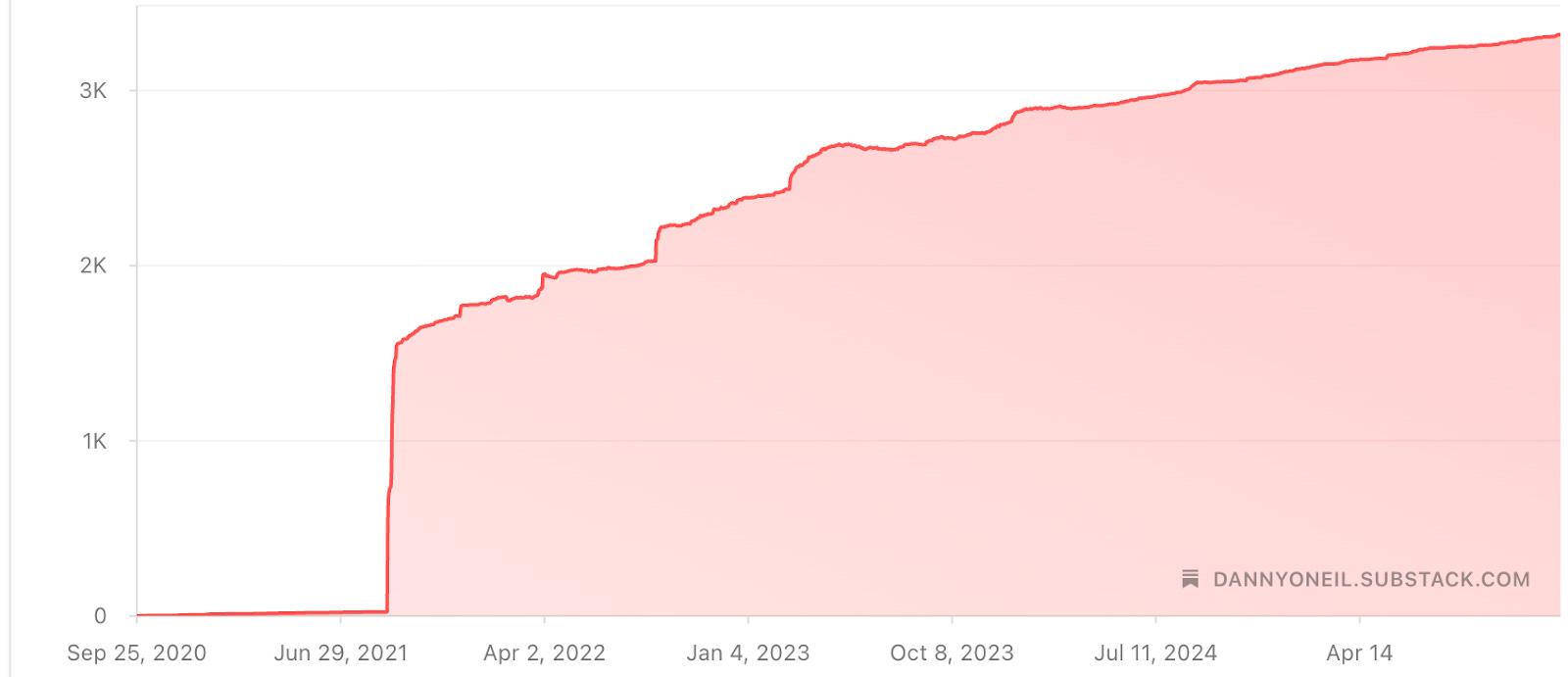
This graph shows that I have had limited success expanding my following after starting the Substack. I think this reflects two things:
My subscriber count is tied to my profile as a Seattle sports writer, which hasn’t vanished but isn’t growing, either, as my role in the market has shrunk;
I’m hesitant to commit too much time growing this publication because I don’t want my writing business to become more tied to Seattle sports. I’d prefer to build out other aspects now that I’m living in New York.
“Grudgery” does have room for growth, and that’s where I want to be spending (much) more of my time in 2026.
What’s something you’re currently obsessed with — and how is it influencing your writing?
Two things, one of which is very practical, the other is painfully niche.
“Smart Brevity: The Power of Saying More with Less” is a how-to guide providing specific tactics for making your writing more accessible and more memorable to digital readers. Everything from formatting to word choice. It’s awesome.
“Prince Among Thieves” by Prince Paul. This is a slightly obscure hip-hop concept album from 1999. It’s billed as a soundtrack, but there wasn’t actually a movie ever made. I bought the album when it came out, but recently repurchased it on vinyl. When I listened to it again, I came to a realization: The whole thing is structured as a single uninterrupted narrative. It starts at the end, with a skit where the narrator explains he has been shot. He then says he has to go back three weeks earlier to explain what happened. The story then commences with each song serving as a scene told in present tense then the narrator comes back to walk you to the next scene (exposition). For whatever reason, this has helped me to “see” a story laid out and for about two months now, I’ve been listening to the album a few times a week while taking a break from writing.


👋 About Danny O’Neil, This Week’s Featured GuestStack Writer
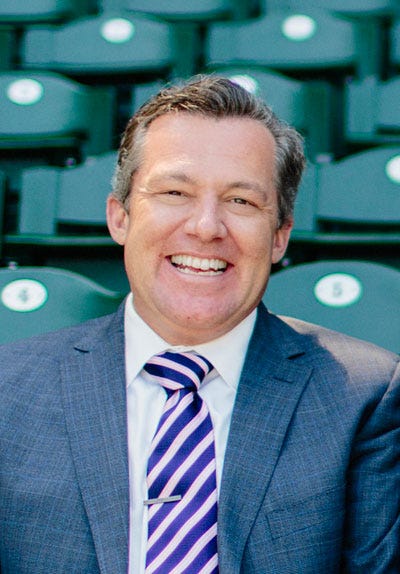
Danny O’Neil was born in Oregon and is the son of a logger. He covered Seattle sports for 20 years writing for two different newspapers, one glossy magazine and then hosting a daily radio show for eight years at ESPN 710 AM. He now lives on the Upper West Side of Manhattan where he continues to write about sports while also working on a book about revenge, resentment and how he got over what had been a life-defining grudge. You can subscribe to his work at dannyoneil.com or grudgery.com or email him at danny@dannyoneil.com.
