


📚 Editor’s Note: You Have the Right to Write
Milli Hill is a true working writer.
For more than sixteen years — long before Substack made it fashionable — Milli showed up week after week to write honestly about women’s lives, bodies, and experiences. That commitment carried her from blogging to journalism, from columns to bestselling books, and eventually to her Substack, What About Women, where she’s finally able to monetize the kind of writing she’s been doing all along.
What I love about Milli’s story is its realism. There’s no overnight success myth here. There’s persistence. There’s doubt. There’s learning when to say no, when to focus, and when to trust that one strong voice is enough. Her reflections on time, permission, and creative guilt — especially for women — feel especially resonant.
This interview is a reminder that writing careers are built in steady increments. By showing up. By paying attention. And by giving yourself permission to face the desk fully — without apology.
– Amy Suto
Editor & Curator of GuestStack
✍️ From the Desk of Milli Hill
Where’s your desk these days — and what does it look like?
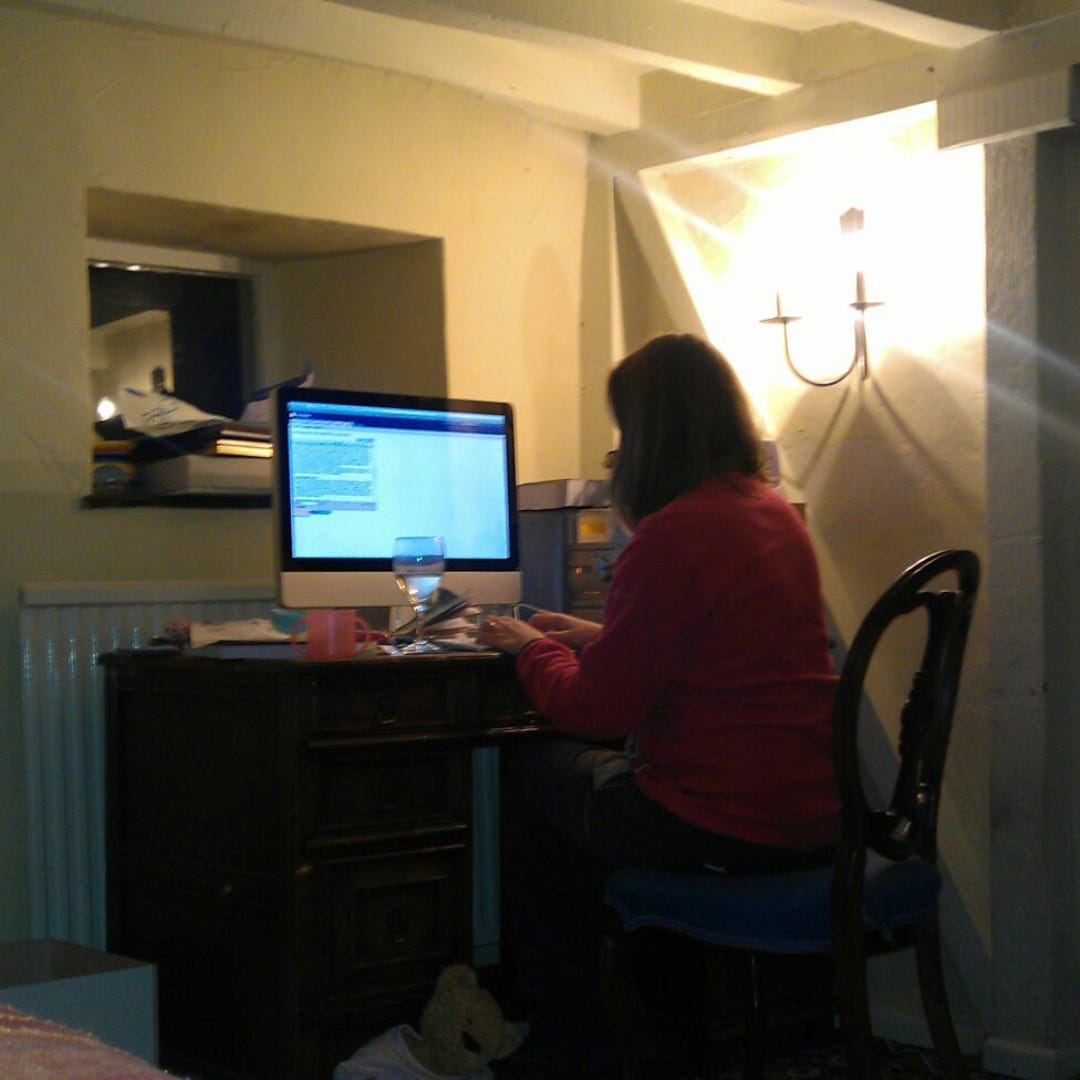
I write on a laptop, either at my kitchen table or in bed, at my home in the middle of nowhere in Somerset, UK. I don’t have a designated writing space although I do fantasise about a lovely little hut in the woods at times! Or by the sea, that would be nice! On the other hand, my life with 3 kids and 2 dogs doesn’t really lend itself to isolation - if I did have a fancy cabin there would always be at least one of my entourage whining at the door to be let in. And in some ways I actually like writing under the pressure of a busy life - I find on those rare days when I finally do have acres of time for silent contemplation that I am actually capable of the most extravagant procrastination methods. I recently saw a cartoon that was advertising a Writer’s Cleaning Service with the concept that the client instructs you to write something and instead you clean their whole house from top to bottom. I’d be great at that.
What does “making writing your job” look like in your world right now, especially as it comes to making money as a writer?
Hahaha make money as a writer - oh, sorry! That was a serious question. OK! *clears throat nervously*
Well, I have been a writer for 16 years. Initially, I was a blogger, and made no money at all from it, then, I started doing freelance journalism and I’d get about £200 for an article, once or twice a month, if I was lucky. I could never figure out a way to monetise my blog, even though it had huge traffic and a great following.
One thing that I did do right - and this is basically my only piece of advice - is I kept showing up. Every week I wrote my blog. Every single week without fail. And then, once I got an ‘in’ with a newspaper - the women’s section of the Telegraph - I kept pitching and pitching, several mornings a week, until one day I noticed on their website I was listed as a columnist! I’ll never forget that moment, I was over the moon - even though it didn’t mean I was being paid more money, it still felt pretty cool. Then I did get a job as a columnist for over two years with an online magazine, and they paid me £250 a week, which was absolutely amazing. At the time I had very small children and that money was a lifeline. And that column eventually became my first book, The Positive Birth Book, and that book really WAS a game changer - it has sold over 100k copies, and I still get some royalties from it now, nearly a decade after it was published (2017).
A couple of years I got about 25k each year which, can you imagine, was the most exciting email to open, I nearly fell off my chair each time! Unfortunately, though, I think the success of that book gave me false hope, because that kind of sales / money from a book is unusual. And even though my subsequent books have all sold well, they have not got up into the same numbers. So the royalty statements for them are more like, ‘Yay we can have buns for tea”, rather than, “Yay I can pay my bills for a while”.
However, I am lucky that I have a great publisher in Harper Collins and they remain interested to hear new book ideas from me. What this means is that to keep making a living I have to keep coming up with new ideas, and pitching them, just like I do sometimes with newspaper or magazine articles. So making money as a writer means constantly keeping my finger on the pulse, listening in to the zeitgeist, and wondering if there’s an angle I can work with to bring my voice to a particular topic, whether that is for a book or an article.
This is where Substack has been a gamechanger, because finally, 16 years after starting my blog, I have found a way to monetise my blog, basically! The regular income I get from substack paid subs has completely changed my life, if I’m honest. I have about 350 paid subs now which is completely wonderful and amazing and I want to hug each and every one of them.
Your Substack What About Women advocates for women across a variety of issues. What inspired you to start your Substack, and what’s been the journey of writing for it so far?
Well in many ways I feel like I started my substack in 2010 on Blogger. And some readers have come with me from all the way back then, which is lovely. I think from back then to now, my blog / substack has always had a feminist element to it, advocacy for women, alongside pieces that are just really honest about what life as a woman is like. In 2010 those pieces were about early motherhood and toddlers, these days it’s more menopause and the invisibility of parenting teens - but the thread that runs through is summed up in the title, “What About Women?”. I try to centre women at all times. And what I love about blogging / Substack is the freedom to just get a fire in my belly about a topic and sit down straight away and write about it, uncensored, from the heart (and sometimes from the hip!).
You’re a bestselling author across multiple books on women’s health. What’s one lesson you wish someone had told you earlier about the business of writing?
That all writers doubt themselves and that doubt is a completely normal part of the writing process, whether fiction or non-fiction. If you know about the Grief Cycle (Denial - Anger - Depression - Bargaining - Acceptance) then you will already be familiar with the Writing Cycle: Inspiration (I have this great idea!) - Self-deprecation (I’m not a good enough writer to pull this off) - Procrastination (That cupboard needs organising) - Desperation (I am useless and this is doomed) - Celebration (I did it! What an absolute writing genius I am, hurrah) - and remember, it’s a cycle, so you will be going round and round this endlessly and forever if you choose writing as your job!
What’s your writing routine like — or do you even have one?
That depends what I have on my plate. When I was writing my most recent book, Ultra Processed Women, I was really up against the clock with a very tight deadline, so I literally wrote ‘every hour god sent’, from the moment I opened my eyes in the morning until the moment I closed them at night. My breaks were only for essentials like the school run, and I ate most of my meals at my laptop. Once I am into a topic like that, I have to do this, because the research is extensive, and it probably takes me about a fortnight or three weeks of intensely long days to produce about 5000 words. When I don’t have such a strict deadline I tend to just write when the inspiration strikes or a little bit each day. Writing for a job does sometimes mean writing when you really don’t have time or don’t feel like it, though. A deadline is a deadline.
I have recently been trying to turn my hand to fiction and I have been attending Writer’s Hour each morning from 8 til 9am, run by the London Writer’s Salon. I find this structure really helpful in making me show up to write, even when I feel lacking in inspiration or confidence. I do this from bed with a strong coffee, once all the kids are out of the door on their way to school and college! In a 50 minute session I can get about 500 to 800 words down, which isn’t much, but one thing I know from writing non fiction is that this does eventually add up to a book. How do you eat an elephant whole? In small chunks, basically!
Was there a moment you realized, “Wait… I can actually do this” in your career as an author and Substack writer?
I think the lovely thing about blogging - and now Substack - is that you get immediate feedback on your writing - and you can really see when a piece has resonated. So right at the start I would obsessively check my stats on Blogger and watch the number of views on a piece rising and rising - or not! Sometimes the pieces that you feel are a work of genius go absolutely nowhere, and the ones that you dash of with a glass of wine in less than an hour absolutely fly. But I don’t think there has been a singular moment when I’ve thought, “I can do this”. It’s just been a gradual process of getting positive feedback on my writing and that giving me the confidence to keep going.
Getting a book deal with Harper Collins was definitely a good moment though (and that was after a bidding war with Bloomsbury!). Those sorts of moments do give you a massive boost. But then, well in my case certainly, you tend to gravitate back to Imposter Syndrome!
What’s something you tried that didn’t work — and what did you learn from it?
Well, I set up a second Substack called Unprocess to write about all of the issues exposed by my most recent book about ultra processed food, and to help people with the practicalities of making food from scratch. I had an initial flurry of subscriptions but then that dried up, and I began to realise I had bitten off more than I could chew. I also realised that, whilst I loved writing that book, I wasn’t sure I was fully invested enough in the issue of food to commit to probably a few years of showing up to that substack every week. So - I hit pause on my paid subs and sent out an apology. That substack is still ‘mothballed’ and I need to make a decision about what to do about it. My hunch is that I probably shouldn’t have started it in the first place. And I think my instinct was telling me that at the time. But then I thought, maybe I am missing a trick here, maybe this could be really successful? And I still feel slightly conflicted over that because I can visualise Unprocess as a really successful substack. I’m just not sure I’ve got the time and the passion to take it to that place! And maybe I don’t have the skills either, because I really don’t like being on camera, making video, photos, reels etc.
So, what have I learnt? Well, you can’t do EVERYTHING. You are only one person. So it’s better to do one or two things really really well than to spread yourself too thin. I think that’s what I’ve learned?! I’m good at writing, and that’s enough.
How do you find or create opportunities for yourself as a writer?
In terms of journalism I still try to follow news stories and pitch when I have the time. If you stop doing this for a while - as I do when working intensely on a book, for example - you come back to find a lot of your contacts have moved on and you have to start over again building up those connections and relationships with editors. In terms of books, I have a good relationship with my agent and we talk fairly frequently about possible ideas for ‘the next book’. In terms of Substack, I just keep writing!
What’s the best investment you’ve made in your writing life (time, money, or energy)?
Time. 100%.
One day a long time ago when I was first blogging I noticed I was sitting at my desk slightly ‘twisted’, with half my torso facing the keyboard, and the other half still turned towards the room - kids, family, partner etc. And I corrected my position - by turning my body to the right to fully face my desk and my work. And I said to myself: You have the right, to write!
It’s really important, especially as women, I think, that we give ourselves permission to fully commit to our passions, our work, our talent, without feeling guilt, without feeling like we have to keep a part of ourselves twisted away from it and focused on other people’s needs.
Show up to the desk, to the keyboard, and keep showing up, without guilt or apology. Carve out that time for yourself. And you will get good at it. Simple!
What About Women is a bestselling publication here on Substack — what were the ways you grew it? Anything out of the ordinary, or surprising to you?
Well I think it’s grown partly from showing up and keeping at it here on substack for a few years, but also from the decade or so of showing up and keeping at it before that! As I’ve said, some readers have come with me to substack, or sought me out here because they’ve liked my work in the past. So, sixteen years of telling myself, ‘you have the right, to write!’, 16 years of showing up whether I felt like it or not, and then just trying to keep being creative and inventive and putting women first - and writing to the best of my ability. That’s not to say that you can’t come to substack fresh and grow something far more quickly, because that’s what originally happened with my blog. However long you have been writing, it’s simply a matter of deciding to write, making a plan and then sticking to it. Not really surprising I guess!
What’s something you’re currently obsessed with — and how is it influencing your writing?
Well I guess I am currently slightly obsessed with the idea of writing fiction, and I’m working on a novel for adults, and have a completed middle grade children’s book that I need to find time to work on some more and revise. So my ‘hobby’ if you like, is thinking about fiction and learning as much as I can about how to ‘do’ it. I’ve done a few courses, read a few books, joined a few groups etc! And I think I have learned a lot in the past few years of exploring fiction, although I still have no idea if I will ever be published in this genre. The positive effect is that when I return to my day job of non-fiction and journalism, it’s quite a relief to realise I do actually know what I’m doing!


👋 About Milli Hill, This Week’s Featured GuestStack Writer
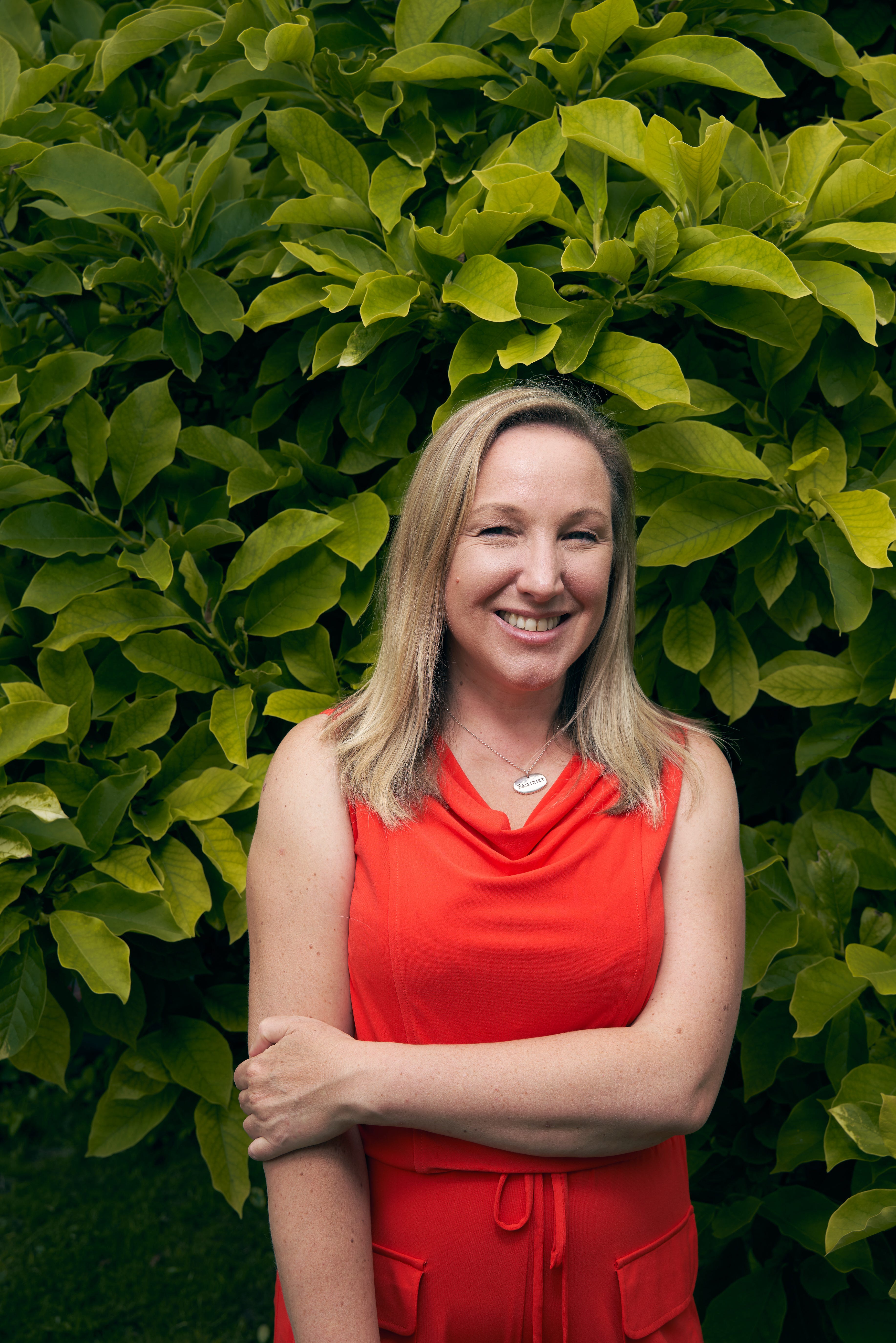
Milli Hill is a writer and freelance journalist with a passion for reframing the narrative around women’s bodies. She is the author of the bestselling Positive Birth Book (2017), Give Birth like a Feminist (2019) and My Period (2021, for preteen girls). Her fourth book, Ultra Processed Women, was published by Harper Collins in July 2025, with a fifth book to follow in 2026. To date, her books have been translated into seven languages.
From 2012 to 2021 she founded and ran the Positive Birth Movement, a global network of antenatal discussion groups aimed at improving birth and giving women better access to support and information. Milli has spoken nationally and internationally about positive birth, obstetric violence and female autonomy in health.
As a journalist since 2013 she has been a columnist for the Telegraph women’s section and written for many publications including Mail, Guardian, Independent, ipaper and Mother&Baby, and has appeared on BBC Breakfast news, BBC Radio 4, BBC Radio 2, BBC 5 Live, talkradio, LBC and many leading podcasts.
She writes a bestselling substack, WHAT ABOUT WOMEN, and lives in rural Somerset with her partner, three children and two dogs.

Amy Soto, In November, took your advice thinking I could jumpstart my writing career. You offered a lead to "Chicken Soup for the Soul" where I was advised to send a story I had written entitled The Cat Dad, about my oldest cat being chased up a tree, where I climbed up for the rescue. A decision was due to be made by March. They have never responded to several requests about my work. If they don't use it, that's ok. I spent considerable time on the true story and want it returned. Please advise. Charles Crable, artsandfarms@aol.com