


📚 Editor’s Note: One Healing Habit at a Time
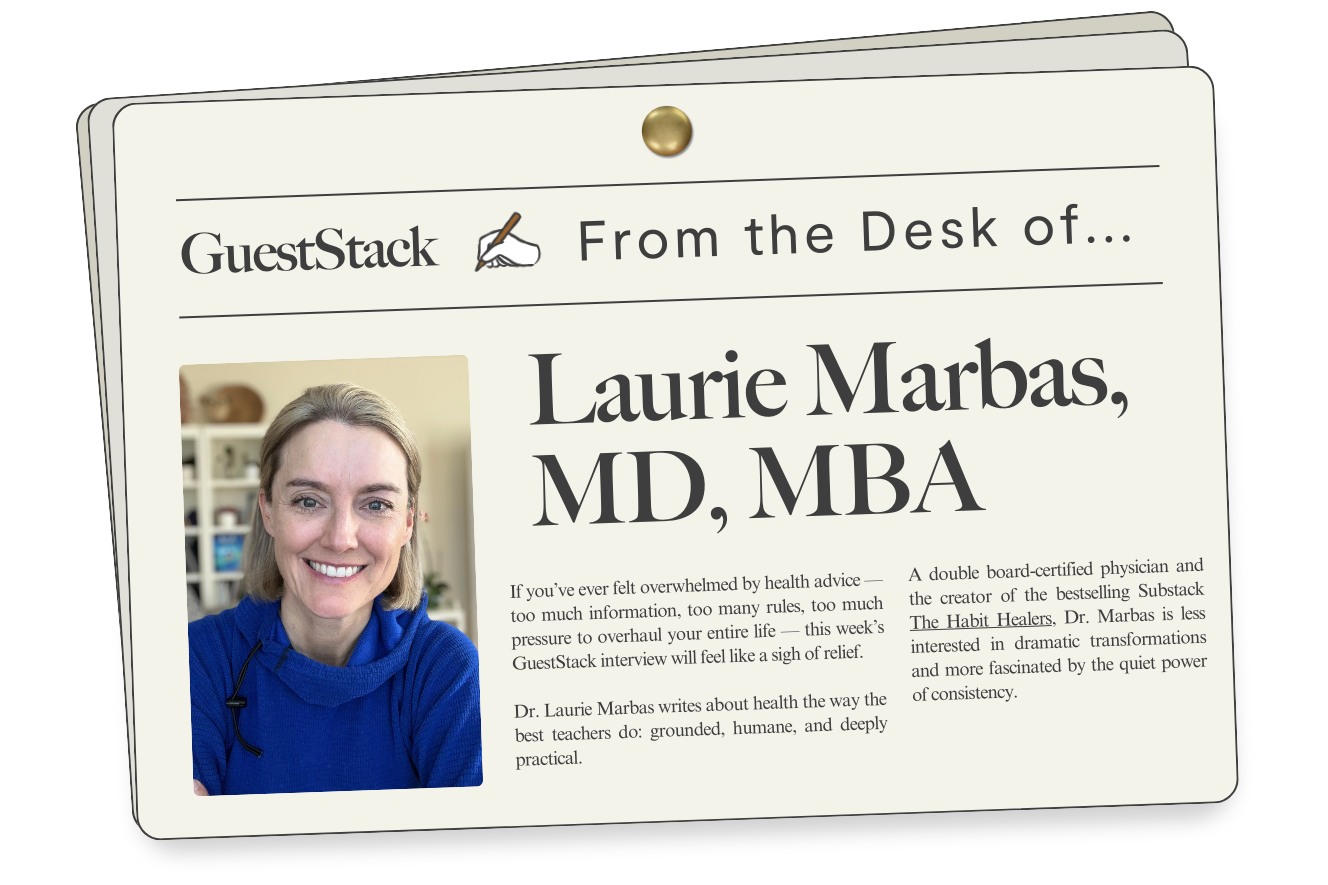
If you’ve ever felt overwhelmed by health advice — too much information, too many rules, too much pressure to overhaul your entire life — this week’s GuestStack interview will feel like a sigh of relief.
Dr. Laurie Marbas writes about health the way the best teachers do: grounded, humane, and deeply practical. A double board-certified physician and the creator of the bestselling Substack The Habit Healers, Dr. Marbas is less interested in dramatic transformations and more fascinated by the quiet power of consistency. Her work centers on a deceptively simple idea: healing doesn’t come from intensity or perfection, but from small, repeatable habits that compound over time.
In this conversation, Dr. Marbas shares the patient story that reshaped her entire philosophy of care, how she learned to teach complex medical concepts through drawings in medical school, and why Substack became the natural home for her work.
We also dig into how The Habit Healers grew, what surprised her about reader behavior, and why clarity and trust matter more than urgency — both in medicine and online writing. If you care about building something sustainable, whether that’s your health, your creative practice, or your community, this interview is required reading.
– Amy Suto
Editor & Curator of GuestStack
✍️ From the Desk of Laurie Marbas, MD, MBA
Where’s your desk these days — and what does it look like?
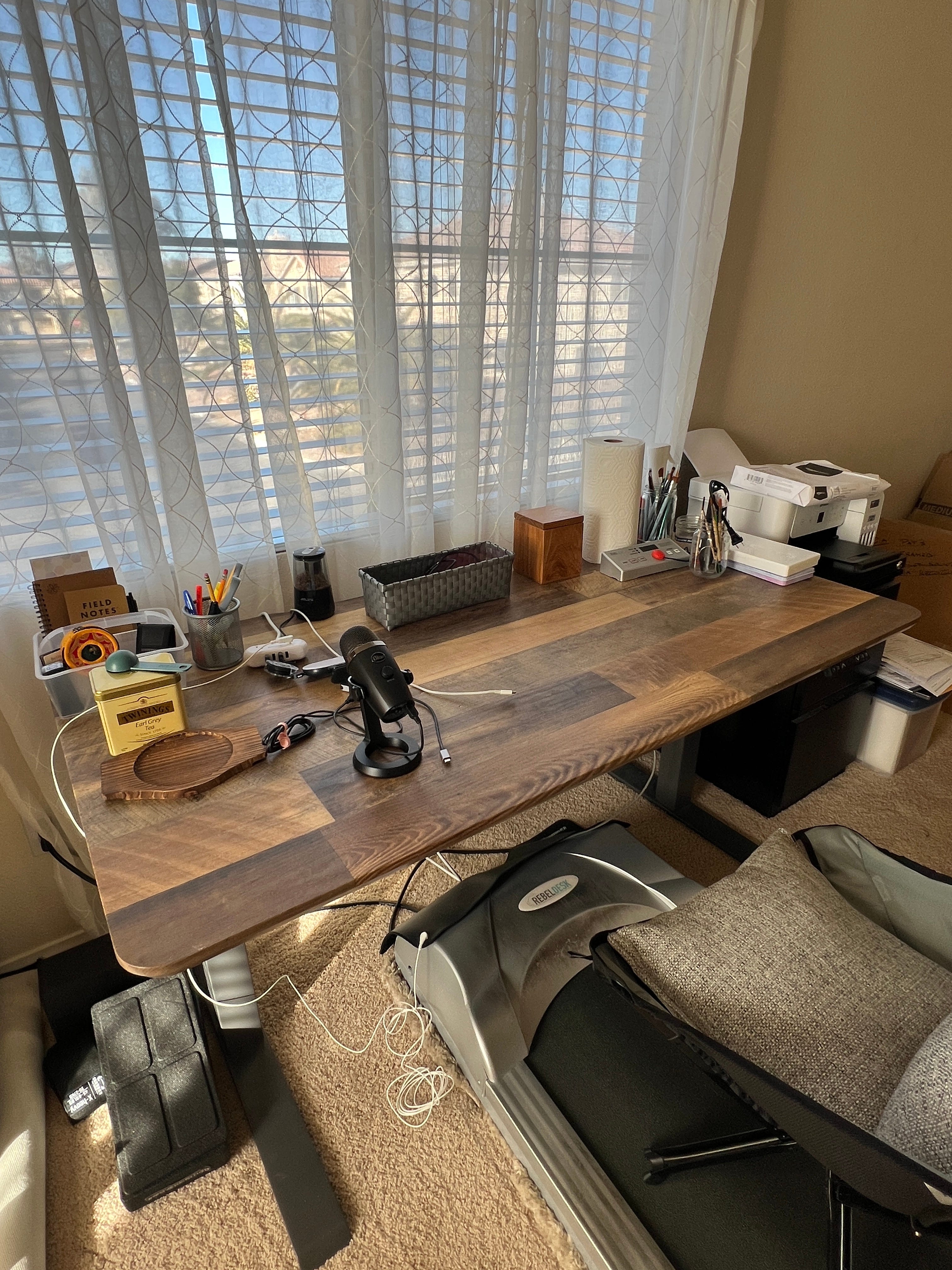
My desk is wherever my body and brain can work together. Sometimes I’m on the floor with my laptop, sometimes at a standing desk, and sometimes in our RV as we travel around the country. I write on my MacBook, always near sunlight. That part is non-negotiable. I don’t drink coffee, but I almost always have Earl Grey tea nearby. I need light, space, and a little freedom of movement to think clearly. The setup is simple, flexible, and intentionally a bit unconventional, much like the way I approach health and habits.
In one of your recent Substack Live interviews on How to Increase HRV (great tips in this, by the way!) you talked about small habits add up to big healing. What was the inspiration for starting your community on Substack, The Habit Healers?
The inspiration came from a patient I worked with years ago who changed the way I thought about health forever. She was exhausted, overwhelmed, and convinced she couldn’t do anything “big” to take care of herself. The only thing I could convince her to do was walk to the end of her driveway the moment she got home from work. She pinky-promised me in clinic she would do it.
That tiny walk became a walk around the block. Then it became a mile. Over time, other small changes followed. She added more vegetables to her meals. She started paying attention to her sleep. Her relationships improved. Before long, she lost 60 pounds and reversed her type 2 diabetes. Nothing about her healing was dramatic or extreme. It was cumulative. That patient sealed the deal for me on the power of habits.
I’ve always loved teaching and making health education accessible. Long before Substack, I was writing for Livestrong, local newspapers, running my own newsletter, and sharing on YouTube and social media. The throughline has always been the same: translating complex health information into something people can actually use.
I had heard about Substack for years and loved the idea of a thoughtful, reader-driven community, but I didn’t launch my own until January 6, 2025. It started as The Healing Mindset, but it quickly became clear that habits were the real foundation of everything I was writing about. That’s when it became The Habit Healers. I wanted people to see that healing isn’t something reserved for the lucky or the disciplined. It’s something built, quietly and steadily, from the inside out, one healing habit at a time. That is why my mantra is, “You are one healing habit away.”
What made you decide to share your professional knowledge with online communities here on Substack?
I decided to share my professional knowledge on Substack because it allows for depth and nuance in a way most platforms don’t. Medicine is often reduced to soundbites and rigid rules online, and that rarely reflects how health actually works in real life.
That instinct to teach started in medical school in the late 1990s. I was in a dual MD/MBA program while raising three young children, caring for a sick grandmother, and managing a household with very little time. When a professor handed us a two-inch pharmacology packet and said it covered the next two weeks, I knew traditional studying wouldn’t work. I started drawing cartoons to encode the information so it would stick. I ended up teaching my classmates using those drawings, and once I saw it help them, I was hooked. That approach eventually led me to publish seven books, including the Visual Mnemonics series, while still in medical school.
I’ve also written many ebooks for patients over the years, so writing on Substack feels like a natural continuation of work I’ve been doing for more than 25 years. In clinic, I translate complex medical information into something patients can actually use. On Substack, I do the same thing at a larger scale. Teaching and medicine have always gone hand in hand for me.
What’s one lesson you wish someone had told you earlier about staying healthy?
I wish someone had told me earlier that consistency matters far more than intensity. Most people think health improves through big efforts, strict rules, or bursts of motivation. In reality, the body responds best to small, steady signals repeated over time. The counterintuitive part is that doing less, but doing it more reliably, leads to better outcomes than pushing hard and burning out.
Health doesn’t require perfection or constant self-discipline. It requires designing your environment and routines so the healthy choice is the easy one. Once I understood that, both personally and professionally, everything shifted.
When it comes to sitting down to write or plan your Substack content, what does your writing/creative routine like if you have one?
I don’t have a rigid writing routine, but I do have a few non-negotiables. I always write after walking my dog early in the morning. That walk clears my head, and when I sit down afterward, I can enter a flow state almost daily. At this point, writing itself has become a habit.
Most ideas come from listening to patients, readers, or noticing patterns in my own life. I focus on getting the first draft down without polishing. Editing comes later, once the thinking is already on the page.
Was there a moment you realized, “Wait… I can actually do this” when it came to sharing your health knowledge with a wider audience?
There wasn’t one dramatic moment, but there was a quiet realization that kept repeating. Every time a patient understood something complex and said, “No one has ever explained it to me that way,” it reinforced that clarity itself is powerful. When people began writing back on Substack saying they made a small change, stuck with it, and saw real improvement, it felt familiar in the best way. It was the same feedback I’d heard in clinic, just coming from people I’d never met.
The dream started to feel real when I realized this wasn’t about building a platform. It was about scaling good teaching. The same approach that worked one-on-one could work for thousands, without losing its integrity.
What’s something you tried that didn’t work — and what did you learn from it as an online creator?
Early on, I tried to package health advice the way the internet often rewards it: tighter, flashier, and more prescriptive. It didn’t feel right, and it didn’t work. People either felt overwhelmed or dismissed it as just another set of rules.
What I learned is that clarity beats cleverness, and trust beats urgency. When I slowed down, explained the reasoning, and gave people permission to start small, engagement improved and, more importantly, people actually applied what they were learning. The mistake taught me that sustainable impact comes from respecting the reader’s intelligence and real life, not trying to out-shout the algorithm.
What’s your favorite interview or article you’ve published on The Habit Healers?
I can’t pick just one, but three stand out for different reasons.
The first is “Want to Be the 80-Year-Old Who Still Hikes? Start Here.” because it centers on a reader’s story, not mine. She shared how The Habit Healers inspired her to start making small changes, including using medicine ball slams as a way to release stress and feel stronger. Writing about her experience was a reminder that this community works when people see themselves reflected in it and realize change doesn’t have to be complicated.

The second is “Nine Tiny Healing Habits That Lower Your Blood Sugar, Most Under 2 Minutes” which is popular right now because it embodies the very principles I teach. Tiny habits really do swing open big metabolic health doors. When people see how small, repeatable actions can meaningfully affect blood sugar, it shifts both their confidence and their willingness to start.
The third is “The Science Shows Four Minutes Is the Perfect Dose to Heal the Heart.” This one highlights a very specific type of exercise, the Norwegian 4×4, and how it delivers outsized health benefits. What I love most is how many readers are actually doing it now and reporting back that they enjoy it. That combination of solid science and real-world adoption is incredibly rewarding.
Together, those three pieces capture what I care about most: real people, good science, and small actions that lead to lasting change.
The Habit Healers is a bestselling publication here on Substack — what were the ways you grew it? Anything out of the ordinary, or surprising to you?
I grew The Habit Healers by focusing first on the work itself. Before worrying about growth, I got clear on what I wanted to write about. Even if you only have an inkling, start there. My focus didn’t arrive fully formed. It narrowed over time as I noticed patterns in what I was writing and how readers responded. That feedback loop created a win for both me and the community.
The next step was being honest about my objectives. Are you writing to teach, to build community, to support your professional work, or to build a business? Different goals require different strategies. Along the way, there will be wins and losses, bursts of momentum and long plateaus. That happens to everyone on Substack.
Consistency is absolutely essential. Readers come to expect you in their inbox at specific times, and that trust matters. Don’t be discouraged if people don’t comment or click “like.” Some of my posts with the fewest visible reactions ended up being my biggest drivers of paid subscriptions.
I also pay close attention to open rates. They tell you which titles resonate and which don’t. One surprising lesson for me was that my readers do not respond well to scary or urgent-sounding health headlines. Those titles caused real stress, and I even lost subscribers because of them. That was the opposite of my intention, and it taught me to align my tone with the emotional experience I want readers to have.
Finally, don’t be afraid to ask your readers what they want. I regularly float ideas in The Habit Healers chat before committing to them. If something falls flat, I let it go. If there’s energy behind it, I build on it and watch the metrics closely. That’s how my current recurring series came to life: Mini Medical School and The Habit Healers Live Lab.
On Saturdays, The Habit Healers Live Lab follows a monthly theme where we build a habit together week by week, and paid subscribers receive a full protocol at the end of the month. On Sundays, Mini Medical School breaks down a single body system or function and rebuilds it into a practical operating manual, with the first week free and the rest available to paid subscribers. Both grew directly from reader feedback, and both continue to evolve because of it.
What’s something you’re currently obsessed with — and how is it influencing your creative practice?
Right now, I’m obsessed with stripping things down to their smallest useful unit. Not just simplifying for simplicity’s sake, but asking what is the tiny, actionable step that actually moves someone forward today. That curiosity is what led me to start a second Substack, One Tiny Healing Habit, where each day focuses on a single, doable action and Sundays include a short healing meditation. Writing it has been pure joy. It feels playful, focused, and surprisingly powerful.
That obsession is influencing my creative practice by pushing me to respect how real people live. Most of us don’t need more information. We need less friction. Whether it’s The Habit Healers, Mini Medical School, Live Lab, or One Tiny Healing Habit, I’m constantly refining how to teach in a way that fits into real mornings, real stress, and real attention spans. I’m far more interested now in what people can practice than what they can consume.


👋 About Laurie Marbas, MD, MBA, This Week’s Featured GuestStack Writer
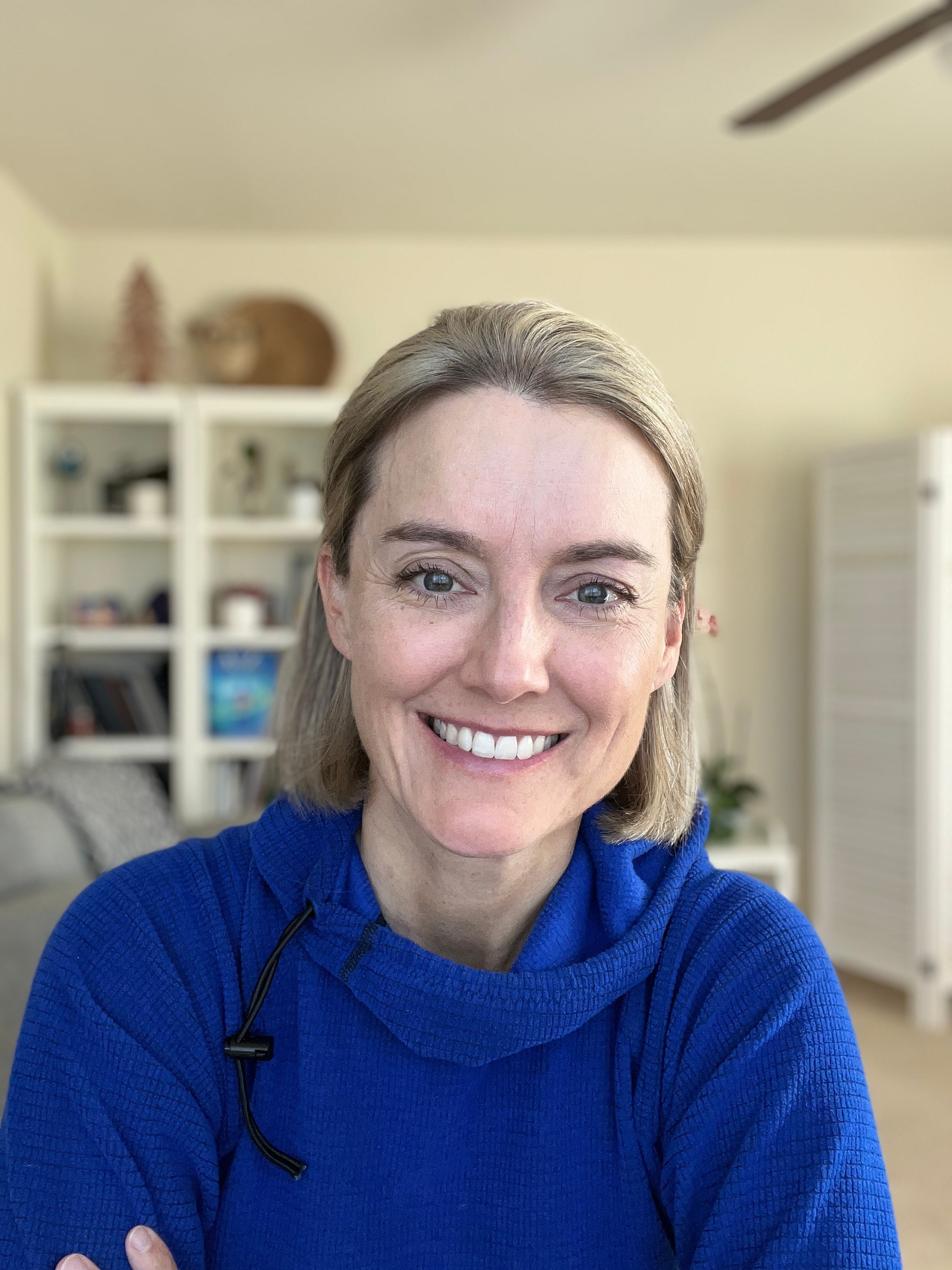
Laurie Marbas, MD, MBA is a double board-certified physician in family medicine and lifestyle medicine. She is the founder of The Habit Healers, a bestselling Substack publication exploring the intersection of behavior change, metabolic health, and healing habits through deeply researched, accessible writing. She is also the co-founder of the Culinary Healing community with Chef Martin Oswald, where healing begins with nutritious, delicious food.
Dr. Marbas holds medical licenses in all 50 states and Washington, D.C., and runs a concierge medical practice at drmarbas.com, providing personalized, evidence-based care rooted in lifestyle medicine. She currently serves as Chief Medical Officer for Metabite, and previously helped launch the International Journal of Disease Reversal and Prevention and served as its first Managing Editor.
She hosts The Habit Healers Podcast, where she interviews experts and shares practical, habit-based strategies to help people reclaim their health. Dr. Marbas earned both her MD and MBA from Texas Tech University Health Sciences Center, where she received the prestigious Gold Headed Cane Award for excellence in the art of medicine. While raising three young children during medical school, she authored seven books, including the widely used Visual Mnemonics series, which simplifies complex medical concepts through cartoons designed for real-world learners.
A U.S. Air Force veteran who served in the Middle East and South America, Dr. Marbas continues her work as a physician, author, educator, and speaker dedicated to healing through habits. Outside of medicine and writing, she finds her greatest joy in family, travel, and hiking the outdoors around the world.
The Habit Healers Substack:
One Tiny Healing Habit Substack:
Join the Culinary Healing Community.
