


📚 Editor’s Note: Creative Reinvention with TV Writer Michael Jamin
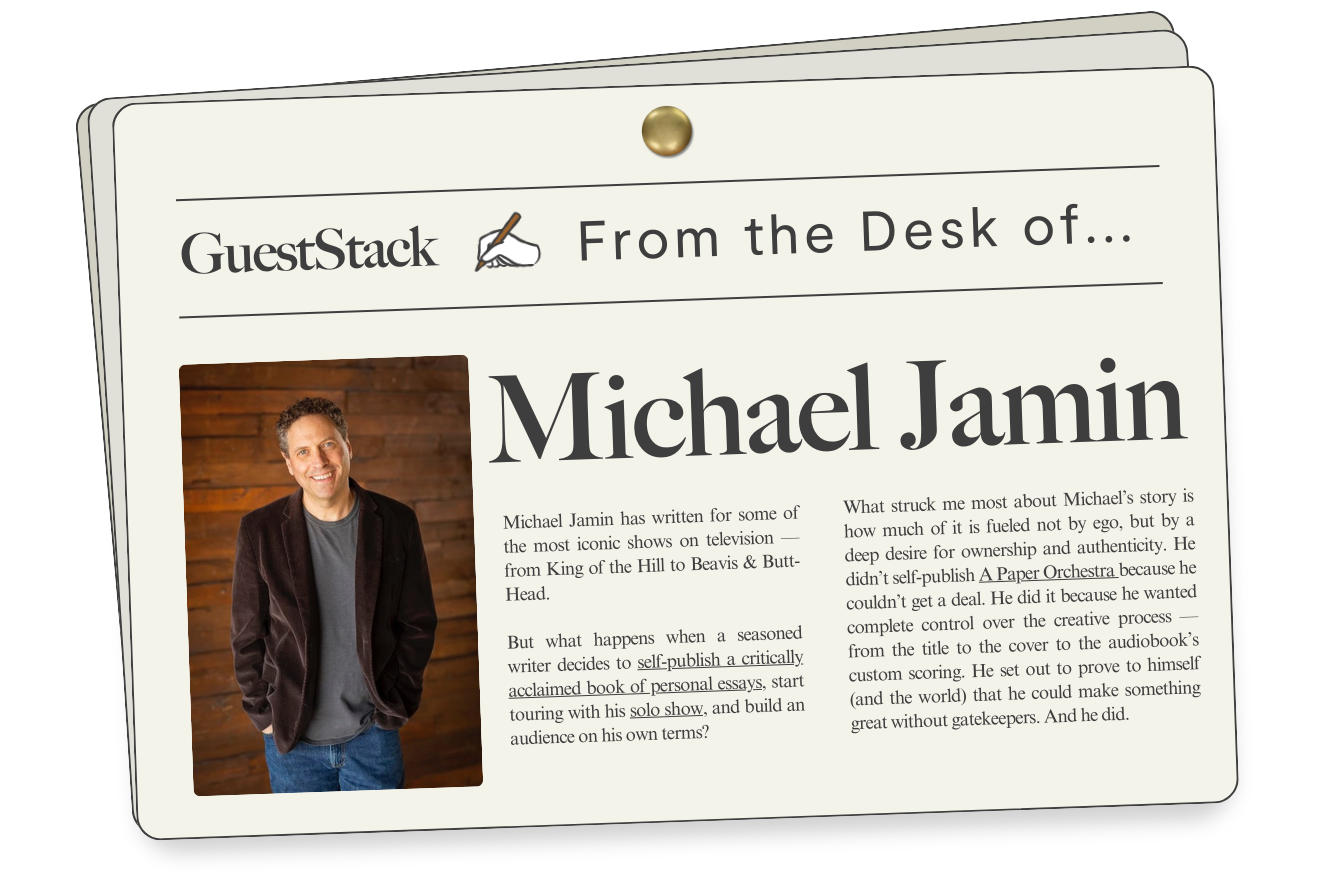
Michael Jamin has written for some of the most iconic shows on television — from King of the Hill to Beavis & Butt-Head.
But what happens when a seasoned writer decides to self-publish a critically acclaimed book of personal essays, start touring with his solo show, and build an audience on his own terms?
This GuestStack interview is a masterclass in creative reinvention, filled with hard-earned insights on the writing life, the entertainment industry, and what it really takes to get your work in front of readers today.
What struck me most about Michael’s story is how much of it is fueled not by ego, but by a deep desire for ownership and authenticity. He didn’t self-publish A Paper Orchestra because he couldn’t get a deal. He did it because he wanted complete control over the creative process — from the title to the cover to the audiobook’s custom scoring. He set out to prove to himself (and the world) that he could make something great without gatekeepers. And he did.
Whether you’re a screenwriter, an essayist, or just a writer trying to find your voice, this interview is packed with wisdom and permission. Permission to go it alone. Permission to be cringe before you’re great. Permission to call yourself a writer — before anyone else does.
– Amy Suto
Editor & Curator of GuestStack
✍️ From the Desk of Michael Jamin
Where’s your desk these days — and what does it look like?
I’m a TV writer, so my desk changes. If I’m on staff of a TV show, I get an office at the studio. If I’m the showrunner, I might have to do revisions on set, which I don’t enjoy. (It’s usually loud and uncomfortable and you’re under the pressure of doing it quickly.)
When I’m developing a pilot, I’m at my writing partner’s home. He has a small guest house that we use. At the moment, I’m writing from the desk in my house which is ideal because there aren’t a lot of distractions… although I’m conveniently using this interview as a distraction.
You’ve had great success in self-publishing your book A Paper Orchestra, an essay collection Vulture called one of the best comedy books of the year. You’ve had an impressive career as a TV writer on some top tier shows, but would love to hear what inspired you to bypass gatekeepers and independently publish your book.
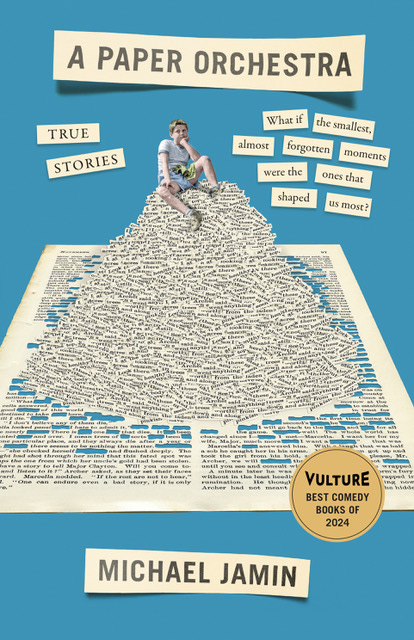
A Paper Orchestra was my passion project. I wanted to show myself and the world what I could write, free from all the studio notes and constraints. Pure creative freedom. I’m a huge fan of David Sedaris and I’ve always wanted to try my hand at what he does: writing humorous essays that have heart and depth.
When I completed the manuscript, I gave it to my agent and he loved it. But he warned me that publishers aren’t looking for the next David Sedaris. Even worse, in this genre (personal essay/memoir/creative nonfiction), “platform drives acquisition.” That meant I needed a large social media following. I told him to give me a year, and I’d get a half-million followers. Of course I was talking out of my ass, but that’s par for the course in any conversation with an agent.
I figured I could get people to follow me by sharing my experience as a Hollywood screenwriter, and it worked. My hope was that if I could come off sounding like a good writer, maybe some of those followers would give my book a chance.
In the meantime, I was learning more and more about traditional publishing from author friends. The things I learned, concerned me. Aside from getting your book sold in brick & mortars (where many readers aren’t even shopping), publishers don’t do much in the way of marketing new authors.
I also learned that I’d probably have limited input on my title and book cover. Covers are so important to me. So many of them use the same color palette and artistic style. Everything starts to look the same. By self-publishing, my designer and I were able to create a book cover we absolutely loved. I gave it a title that elevates the collection, instead of dumbing it down.
I get it. Those creative decisions help sell books, and publishers know what works. But this wasn’t about money to me. I make plenty of money as a TV writer.. I wanted my work to be judged on its own merit. And I wanted a final product that I could be proud of.
Not to mention the audiobook! As a TV writer/producer, I knew exactly how I wanted to produce the audiobook. I also knew a big publishing house would give me a tiny budget. It took a year, but we produced an audiobook exactly the way I wanted. I hired the composer on one of the shows I produced, and together, we created something really special. I gave him only one note: Listen to each story and tell me exactly how it would sound if it were music. And he hit it out of the park. It really turned the audiobook into something unique.
What’s one lesson you wish someone had told you earlier about the business of writing?
In retrospect this is terribly naive, but I thought the world of literature would be different from Hollywood. More elevated somehow. Turns out, they’re very similar. Publishers are businesses just like the studios. They’re looking for books that aren’t necessarily well written, but are easy to market. It’s why celebrities and athletes get book deals, when they probably didn’t even write the thing. What truly surprised me, however, is how low the bar is for success. Most traditionally published books barely sell any copies.
What’s your writing routine like if you have one? How does it differ from TV writing to writing something like your book?
I’m most creative in the morning, so I generally use that time to work on my next book. TV writing is a different animal. The hours are notoriously brutal, but because it’s a group activity, it’s ok to let another writer carry the load when you’re creatively exhausted. But that’s the trade-off. Sometimes a writer will take my draft and make it better. Sometimes they’ll make it worse. But 100% of the time they’ll make it less “mine” and more “ours.” This is another reason why, after 28 years of being a TV writer, I wanted to write a book all by myself.
Was there a moment you realized, “Wait… I can actually do this” and realized writing was something you were truly gifted at?
There’s a story in A Paper Orchestra that’s particularly popular among emerging writers. It’s called “The House on Witherspoon Street” and it recounts my days as a student at Princeton University, where the creative writing program rejected my application not once, but twice. Truthfully, I wasn’t a good writer, but that’s why I wanted to get accepted – so that someone could teach me how to take the loneliest thoughts in my head and express them in a way so that other people could feel what I feel. So that I would feel seen and heard and less alone in the world. (Isn’t that what all writers want?)
I wound up getting an internship at a local radio station where I befriended a 60 year old socialite named Helen. She hosted a call-in show, and somehow convinced me that I was already a successful writer. I played along with her charade because I wanted it to be true. But one day, everything came crashing down. Writers love this story because it’s so relatable and cringy. And yet, it offers hope, because eventually, I became a successful screenwriter.
What’s something you tried that didn’t work — and what did you learn from it?
One of the advantages that TV writers have over authors and even feature writers, is the amount of stories we work on. Coming up, I’d often work on shows that produced 24 episodes per year. That’s a lot of stories to come up with! A feature writer or author might only do 1 or 2 stories per year. This is how new writers get their reps in. It’s this repetition that really teaches you how to tell stories. You learn how to identify problems in stories and how to fix them. I always tell emerging writers not to spend too long on one project. Just finish it, then start another. And another. By the time you finish your fifth project, you’ll see how far your writing has advanced. It’ll be so much better than if you had just polished that first project over and over.
How do you find or create opportunities for yourself as a writer?
A few years ago, I decided I wanted to write and perform my stories in front of audiences… just like David Sedaris. (Why does he get to have all the fun?) This is why I took to social media to share my experiences as a TV writer.
In the beginning, I felt like a giant fraud. Yes, I’ve written on a lot of hit shows, but I’m not nearly as successful as Shonda Rhymes or Greg Daniels or Chuck Lorre. I didn’t want people to think I was Mr. Hollywood. To some degree, I felt like an imposter. And when I started selling tickets to my solo show based on my book, I truly felt like an imposter. “Who am I to be doing any of this?!”
After every show, people would ask me for an autograph and photo. Some of them actually flew to see me perform. It was hugely flattering, but part of me wanted to scream, “I’m not who you think I am. I’m just a TV writer!” My point is, it takes a lot to get over this hump of feeling worthy. You have to invent yourself. You have to give yourself permission to be where you want to be. That’s a lot to wrap your head around.
What’s the best investment you’ve made in your writing life (time, money, or energy)?
If you’re truly serious about writing, my advice is to study writing. Not necessarily from a professional teacher, but from a professional writer. Someone who has the job you want.
Emerging writers sometimes fail to realize they’re not just competing against other emerging writers. They’re competing against people like me. People with lots of experience. Even if your goal isn’t to sell a screenplay. Even if you just want to self-publish a book or stage a play in community theater, we’re still competing for the same eyeballs. Audiences only have so much free time. If you want to compete with people like me, you have to know what we know.
“What the Hell is Michael Jamin Talking About?” is your bestselling publication here on Substack — what were the ways you grew it? Anything out of the ordinary, or surprising to you when it came to attracting readers to your work?
I try to post 4-5 times a week on social media. Some of my followers are just curious about my profession, but many aspire to turn pro. For those people, I always mention that I have a Substack on the business and craft of writing. Of the people who say they want my career, only a small fraction of them actually subscribe to my Substack. And even a smaller percentage sign up for the paid tier. They say they want to be a professional writer, but they don’t take the necessary steps to actually make it happen.
This should give you hope. It means that if you’re serious about making a living with words, your odds aren’t as bleak as they might appear.
Here’s something that surprises me even more. When people unsubscribe from my paid Substack tier, they can give a reason. The most common reason people give isn’t price and it isn’t content. It’s time. I post once or twice a week, yet they can’t find the time to read an article or two?!
I think what they’re really experiencing is guilt. Seeing my emails pile up, without taking action on them, makes them feel bad. It’s just easier to unsubscribe. I say this all the time: you can have excuses or you can have results. But you can’t have both.
All of this is tons of work. It just is. But if someone with my experience has to do the work, then newbies have to do it too. Again, off this knowledge that I share on my Substack… all of it began with the intention to do one thing: sell copies of my book, A Paper Orchestra. I’ve spent three years giving away the farm, just so that my book can move up the charts. I’ve sold a lot of books by doing all this. But I can tell you this, if I hadn’t done any of it, I would’ve sold only a dozen copies… all of them to my mother.
What’s something you’re currently obsessed with — and how is it influencing your writing?
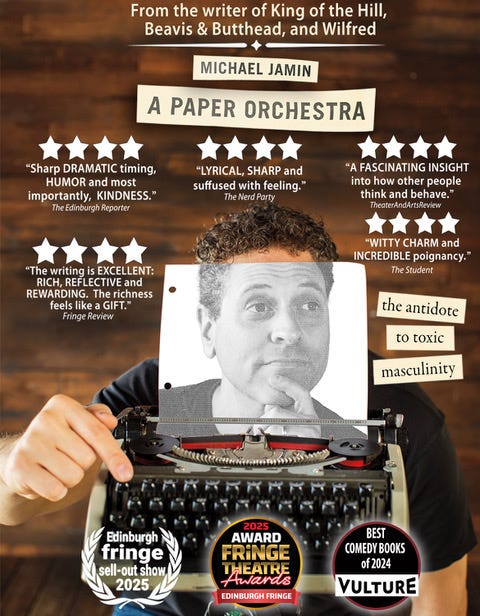
We’ve been touring with my solo show, A Paper Orchestra which my wife, Cynthia, produces and directs. We’ve done shows in Los Angeles, New York, San Francisco, Seattle, Boston, Chicago, and Philadelphia. We also performed at the Edinburgh Festival Fringe where we took home a Fringe Award. It’s been such an amazing experience and doing these shows has influenced my next book because I’m constantly asking myself, “How can I make this more fun to perform?” That, in turn, helps the writing come alive.

👋 About Michael Jamin, This Week’s Featured GuestStack Writer
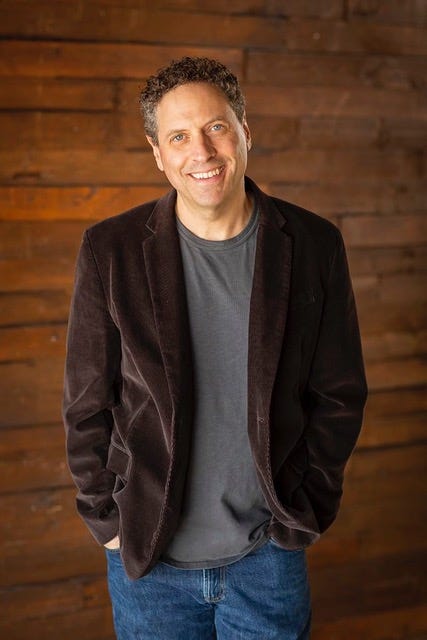
Michael Jamin has been a professional TV writer since 1996. His many credits include King of the Hill, Beavis & Butt-Head, Just Shoot Me, Wilfred, Maron, Rules of Engagement, Out of Practice, Brickleberry, Tacoma FD and more.
A Paper Orchestra is his bestselling collection of personal essays, which Vulture named “Best Comedy Books of 2024.” He lives in Los Angeles.

