


📚 Editor’s Note: From Attention to Intention
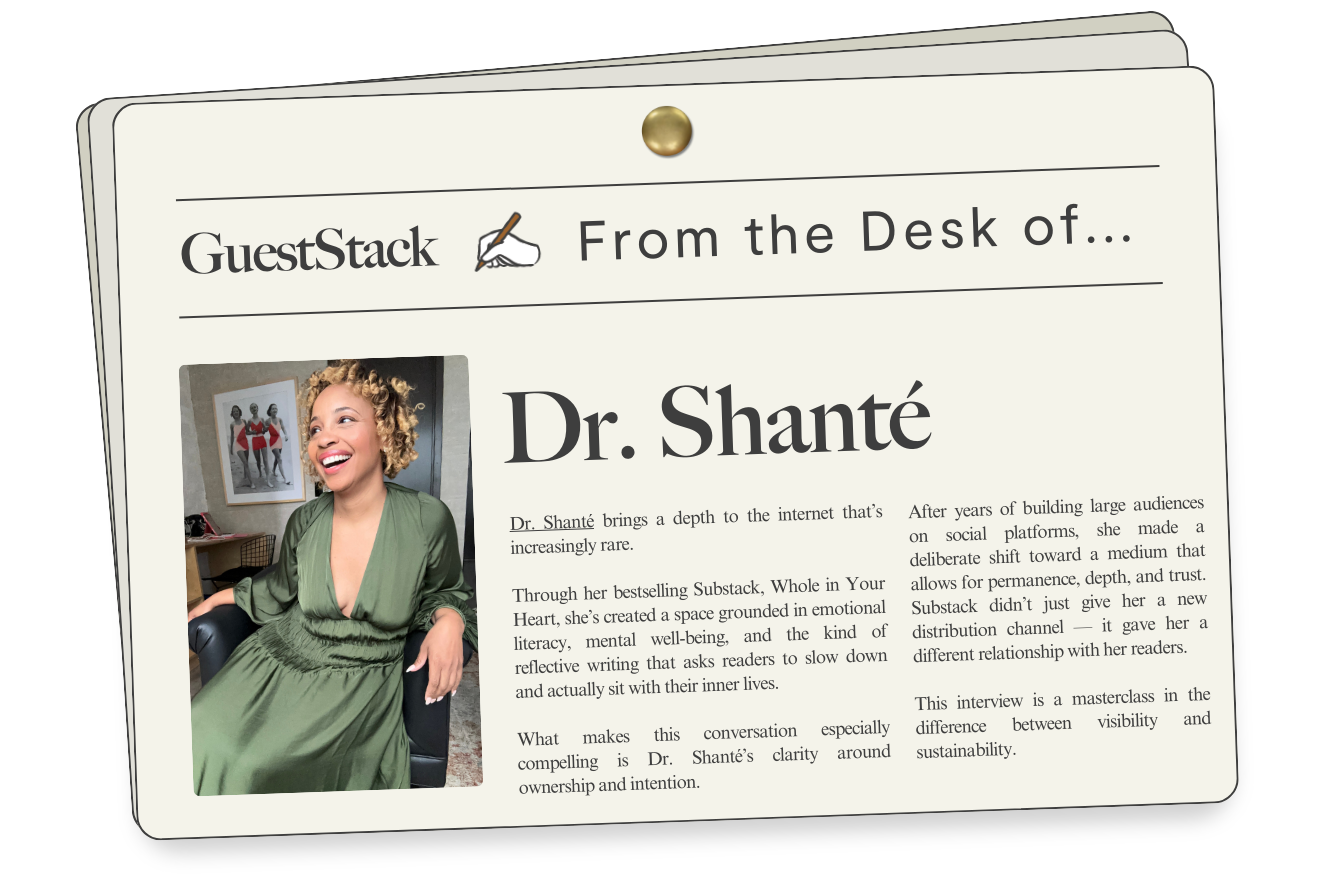
Dr. Shanté brings a depth to the internet that’s increasingly rare.
Through her bestselling Substack, Whole in Your Heart, she’s created a space grounded in emotional literacy, mental well-being, and the kind of reflective writing that asks readers to slow down and actually sit with their inner lives.
What makes this conversation especially compelling is Dr. Shanté’s clarity around ownership and intention. After years of building large audiences on social platforms, she made a deliberate shift toward a medium that allows for permanence, depth, and trust. Substack didn’t just give her a new distribution channel — it gave her a different relationship with her readers.
This interview is a masterclass in the difference between visibility and sustainability. It’s about treating writing as both service and strategy, honoring the process of becoming a writer, and understanding that attention alone is not the same thing as impact.
If you’re thinking about how to build something lasting — something that belongs to you — I think you’ll get a lot out of this.
– Amy Suto
Editor & Curator of GuestStack
✍️ From the Desk of Dr. Shanté
Where’s your desk these days — and what does it look like?
My desk lives in my living room, which is large enough that I’ve divided it into distinct “live” and “work” zones. On one side of my desk is the part of life where I unwind… a (slightly oversized) modular couch, a bar cart, wall art, a mounted flatscreen, and a pair of mid-century modern buffet cabinets that I’ve repurposed as bookcases. On the other side is where I write.
My desk is a mahogany library desk with shelving on both sides. One set of shelves holds my collection of Funko Pop, Star Wars figurines (Grogu definitely appears more than once); the other shelves highlight my addiction to pocket journals, Post-it notes, index cards and highlighters. I’m fanatical about writing stuff down. Whatever makes it onto the screen has usually passed through my hands first.
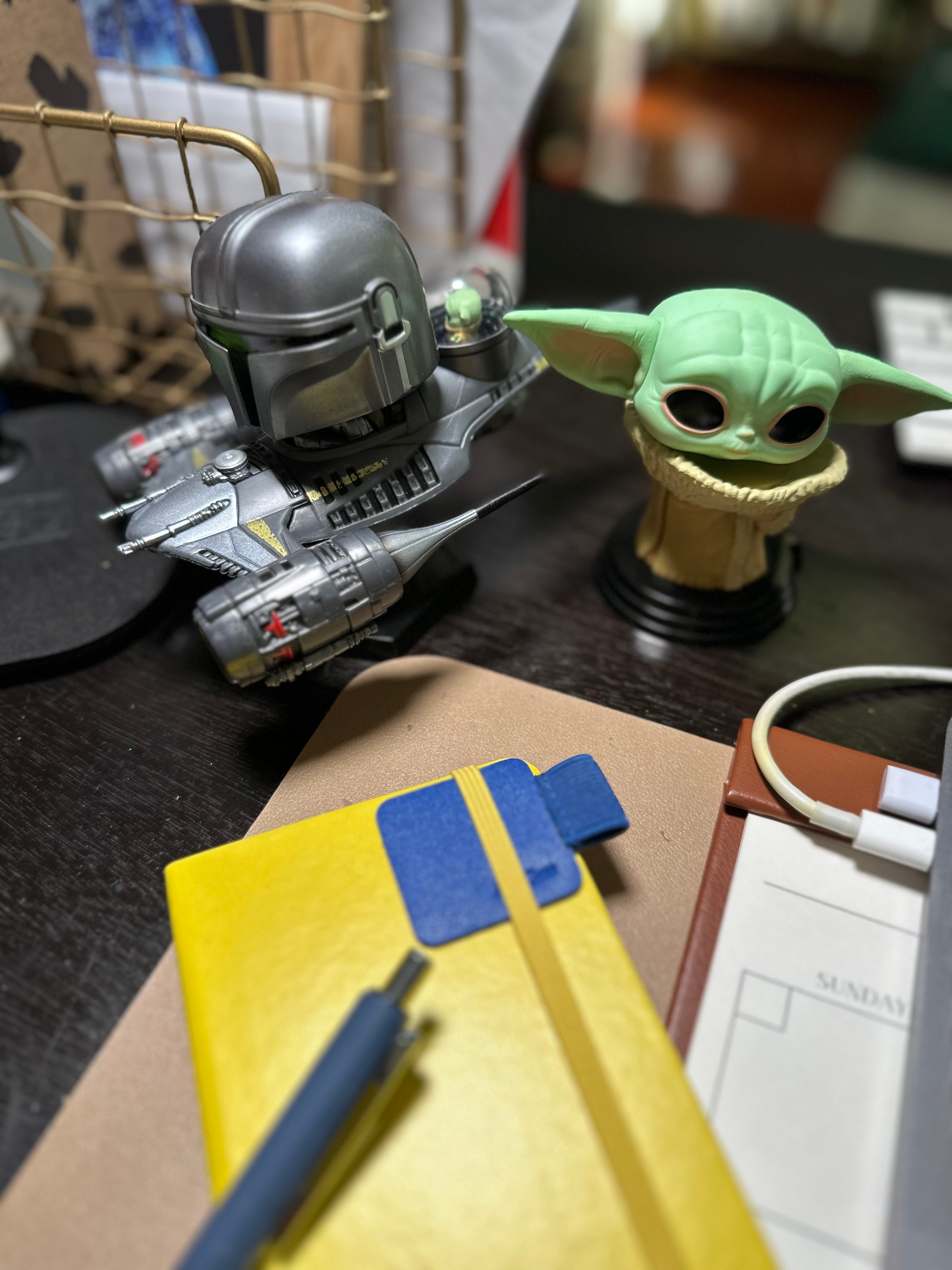
During writing hours, my flat screen is my jukebox; I usually have YouTube playing Vince Guaraldi in the background. Jazz or Gershwin is my go-to for background noise. You’d be surprised what you can create with Rhapsody in Blue cranking in the background.
Your Substack readers get in touch with ways to better approach mental health. How did you get the idea to start it? What was that moment like?
My publication is called “Whole in Your Heart” and it is grounded in mental well-being and emotional literacy. I’ve been doing this work for over a decade. It started as a podcast, expanded into coaching, and grew into short form content. This work began because I noticed a disconnect between people’s intention to achieve goals and their subsequent inability to do so. My research led me to discover that the disconnect is often rooted in unhealed wounds, limiting beliefs, and unresolved trauma.
Two years ago, a video I posted went viral and my platform exploded with thousands of new followers. Then last year, a “funny” thing happened. TikTok went dark. It was a calculated, political move, and it reminded me how precarious it is to build on land you don’t own. In two years time, my social media following has gained over 200K followers, and in the blink of eye, a flip of a switch, it could all disappear… without warning, without any consideration of the work I’ve done to build that following.
That’s when I knew I needed to pivot. I started researching Medium and Substack and came across some solid YouTube reviews of the platform (thank you, Amy Suto). Substack offered three things I was actively seeking: portability, security, and credibility. My subscriber list belongs to me. I have a direct line to my readers. And it positioned my work in a different light, not as something to scroll past, but to sit with. It gave my audience a way to discover the depth of my work in written form. TikTok came back the next day, but by the following week, I had found a new home on Substack.
What does “making writing your job” look like in your world right now?
Writing isn’t my main profession, but I’m on my way. I’ve had book writing in my sights for a long time. I self-published a decade ago, but I’ve evolved so much since then. That experience taught me valuable lessons like how much it actually costs to get your work out there, and the sheer volume of marketing and selling required just to break even.
These days, writing as a job is two-fold.
First, I write as an act of service. It’s my “job” to show up even when it doesn’t pay the rent, because my work gives voice, language, and support to people who struggle to name their experiences, their hardships, and their truths.
Second, having paid subscribers is a completely novel experience for me. When the first few subscriptions came in, I felt like Sally Field: “You like me! You really like me!” But beyond that emotional validation, it serves a practical purpose; it’s proof of concept.
This year, I’ll be querying literary agents, and having a paying audience shows publishers that readers are invested in my work. I’d like to spend the balance of the year finishing the manuscript and securing my first traditional book deal.
What’s one lesson you wish someone had told you earlier about the business of writing?
Followers are not dollars, and readers aren’t necessarily buyers.
I have people come to me all the time like, “OMG! You have almost 300K followers!” And I guess I’m supposed to feel proud of that, but I’m actually intimidated by it. I’m an introvert. I don’t make viral content. I make content, and sometimes it goes viral, which is an unintended byproduct of consistently showing up and speaking truth.
Having a large following is as a vanity metric for many, but for me, it’s humbling. “Wow... you could have been anywhere in the world, and you chose to be here with me.” The world is incredibly noisy. There’s no shortage of content, voices, or opinions. To create something that cuts through and finds purchase is both incredible and improbable.
But having a message that lands is not the same as having a message that sells.
I’ve had to learn to gently weave in calls to action when I’m promoting something. You have to invite people to take the next step with you. I’ve seen writers complain that their publisher didn’t “push” their work hard enough, and I’ve seen publishers push back that the writer also has a role as a seller. Both are right.
Attention doesn’t automatically convert to action. Building an audience is one skill. Turning that audience into customers, subscribers, or book buyers? That’s a completely different muscle.
What’s your writing routine like — or do you even have one?
I am a scribbler, a jotter, a brainstormer. When I have a scrap of a thought, a word, a phrase, a fragment… I have to write it down. I keep a pocket journal. If you flipped through it, it would look completely nonsensical. There’s no key. No codex. It’s a physical representation of how my brain works: a cacophony of thought, everything, everywhere, all at once.
But when I sit with it, I start to make sense of it. Where was I going with this?
Having a routine is actually what intimidated me about launching a publication on Substack. A universal truth about content creation is that once you have an audience, you have to keep feeding the meter. I didn’t know if I had it in me to sit down every week and crank something out. But once I started, I realized I had a LOT to say, much more than I could express in the limited space of a 2-minute reel or YouTube short.
I schedule my writing around my teaching schedule at my college. I do my best work between 10 a.m. and 3 p.m. That’s when I have peak energy and creativity. And I do my best writing away from home. Even though I’m an empty nester, my desk at home isn’t just for writing; it’s also for my work as an educator and a coach. I need physical separation to shift into writer mode.
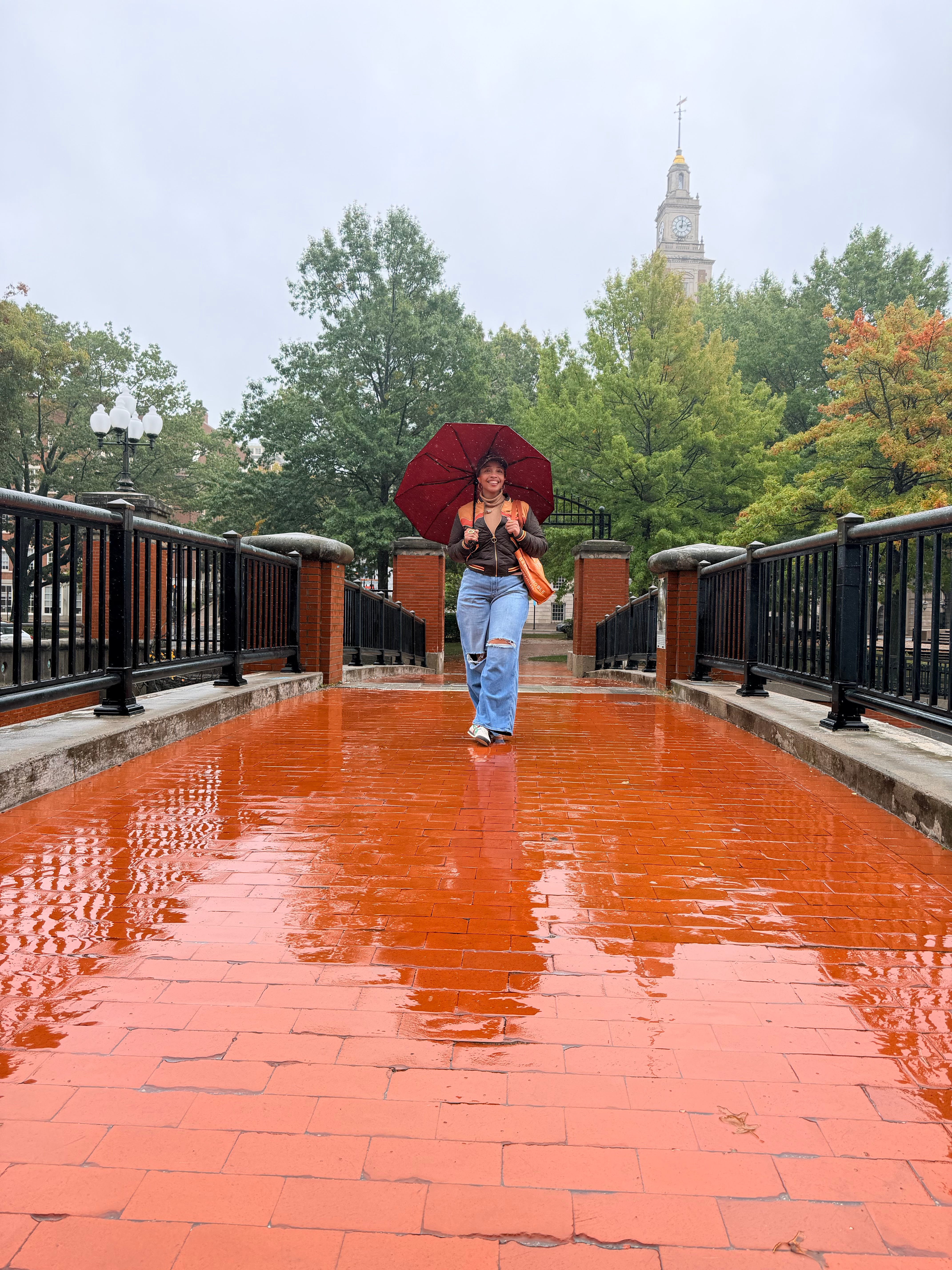
My favorite place to write is the library. There are some BEAUTIFUL libraries and Athenaeums in this country: Boston, Cincinnati, Providence. And I love to write in the rain. I’m a pluviophile. Rain begs for creation. After securing a book deal, I plan to schedule one weekend away per month to write in a beautiful space, ideally with a window, a storm, and nowhere else to be.
Was there a moment you realized, “Wait… I can actually do this”?
There’s a difference between viewers and readers. Just because I had a significant social media following, didn’t mean people wanted to read my work. Scrolling is passive and low stakes. Reading is an investment of time and focused attention. There was no guarantee that my followers would want to take that leap.
I posted my first Substack, on a Sunday night, January 26th with no launch plan, no fanfare and nary a subscriber. Five days later, I had 300. I felt like Gerard Butler: This is Sparta!

I had zero frame of reference for how long it takes to grow on this platform. I didn’t know if my experience was typical or an anomaly, but it made me feel like, wait a minute… I might be on to something here. When I earned the bestseller badge eight months later, it felt like a fever dream. Oprah says, “your life is always speaking to you.” I feel like Substack is life’s way of saying that I’m doing exactly what I’m supposed to do and I’m right where I need to be.
What’s something you tried that didn’t work in your journey as a writer and educator — and what did you learn from it?
Two things stand out.
First, I can’t write prescriptively. I’d love to be that writer who has a content strategy with all my topics laid out on the calendar and scheduled for publication. But 2025 was a tough year for many people, for many reasons. My platform is about mental health, the bedrock of which is empathy. My work requires me to read the room. And I can’t show up like, “Hey! Let’s talk neuroscience...” when people are reeling from civil unrest, massive layoffs, and social discord. So, many times this year, I went “off script” and wrote what I knew many people were feeling. It may have cost me some subscribers. It may have gained me some. But it’s hard for me to stay “neutral” when I know there are elephants in the room.
Second, I’ve had to confront my own discomfort around charging for my writing. I’m still learning how to balance what’s offered freely with what lives behind a paywall. What additional benefits do I offer that won’t exhaust me, will add value, and are worth the investment?
I tried creating a podcast for paid subscribers using Substack’s podcast feature. The listening numbers weren’t great. It was a lot of extra work, and while valuable, I don’t think it was the best use of my time if people weren’t engaging with it. Listening is a different dynamic than reading; what works in one medium doesn’t automatically translate to another.
I also struggle with promoting my writing on social media. I’m still working on a seamless way to translate my long-form work into the short-form content I create. I wrestle with striking the balance between Shanté the Content Creator and Shanté the Writer, and how to best serve both audiences without burning out. But what’s absolutely working is authenticity; it is far more appreciated by my subscribers than a canned post that I scheduled two weeks ago.
How do you find or create opportunities for yourself as a writer and educator?
I’ve been a solo act for a really long time. And what that’s cost me is time to think strategically about alliances, partnerships, communities, or where I’d like my work to live. Writing as a vocation is a bit like entrepreneurship; you can spend so much time working in the business that you forget to work on the business. I’ve been building the plane while flying it, which has led to some great invitations like podcasts, sponsorships, speaking opportunities, but not always with intention. This year, I’m moving differently.
Instead of setting goals, I created a set of questions to guide my thinking. One of them is, “What connections would I like to make?” It prompts me to think about who I want to be in community with and who I want to learn from. This year, I’m being intentional about surrounding myself with other writers and thinkers, both as a consumer of their work and as a contributor to the conversation.
I’ve learned that opportunity doesn’t always have to be monetary. Sometimes it’s being invited into rooms or asked to sit at tables. Those invitations can pay dividends down the road: in relationships, in visibility, in doors that open because someone remembered your name at the right time.
What’s the best investment you’ve made in your writing life (time, money, or energy)?
Bird by Bird by Anne Lamott was a great read. Not only is she hilarious, but that book does a brilliant job of unpacking the difference between being a writer and being a published author. Some people are chasing the outcome and are less invested in the process of becoming a good writer. I’ve been teaching English composition for almost 20 years, and I know all too well the value and the arduousness of drafting. But there’s real value in that work.
1000 Words by Jami Attenberg was also transformative for me. I love processes and systems, and Jami’s approach, 1,000 words a day for two weeks, seemed challenging but doable. It put a framework around carving out the time and hitting the output needed to actually get a draft completed.
Beyond books, last year, I invested in a course from Luvvie Ajayi on how to write and structure your book proposal. I never thought of a book proposal as a business plan for your book, but that’s exactly what it is, and it was invaluable to see what that process looks like and how to present myself and my work to agents. This year, I signed up for a querying workshop with Eric Smith, author and founder of Neighborhood Literary. His workshop includes feedback on the first 10 pages of my query which is insanely valuable at this stage in my career.
Whole in Your Heart is a bestselling publication here on Substack — what were the ways you grew it? Anything out of the ordinary, or surprising to you?
Consistency is my superpower. Getting motivated to do something and staying motivated to do it are two separate things. When I was researching Substack, I saw a writer say, “Treat it like it’s your job.” And that shifted something for me. I’d never pull a “no call-no show” at work because I have a responsibility to the college. Likewise, I have a responsibility to the readers.
When relationships are new, they need the most attention because we’re establishing our rhythm, our chemistry, our ebb and flow—all the things that make us, us. And that’s how I treat my Substack, like it’s a new community.
Also, the Notes feature on Substack is my jam. It’s perfect for people like me who already have a ton of short-form content. It’s a way of introducing people to my work and giving them just enough to be curious. I’ve gotten hundreds of subscribers from posting a 2-minute video of me reading an excerpt of a recently published article or sharing a video on a socially relevant topic.
What’s something you’re currently obsessed with — and how is it influencing your writing?
I am falling back in love with analog. I spent last year building my library, reading physical books. This year, I subscribed to the print version of The New Yorker, to reacquaint myself with sitting down and enjoying the tactile pleasure of turning pages and spending longer periods of time away from a screen.
Whenever I visit a new city, I make a point to visit their libraries and independent bookstores. I always find inspiration there. Last year, I visited Toronto, and their public library has an entire dedicated room to the work of Sir Arthur Conan Doyle. I have always loved Sherlock Holmes, and I got to hold an original copy of A Study in Scarlet. Are you kidding me?!
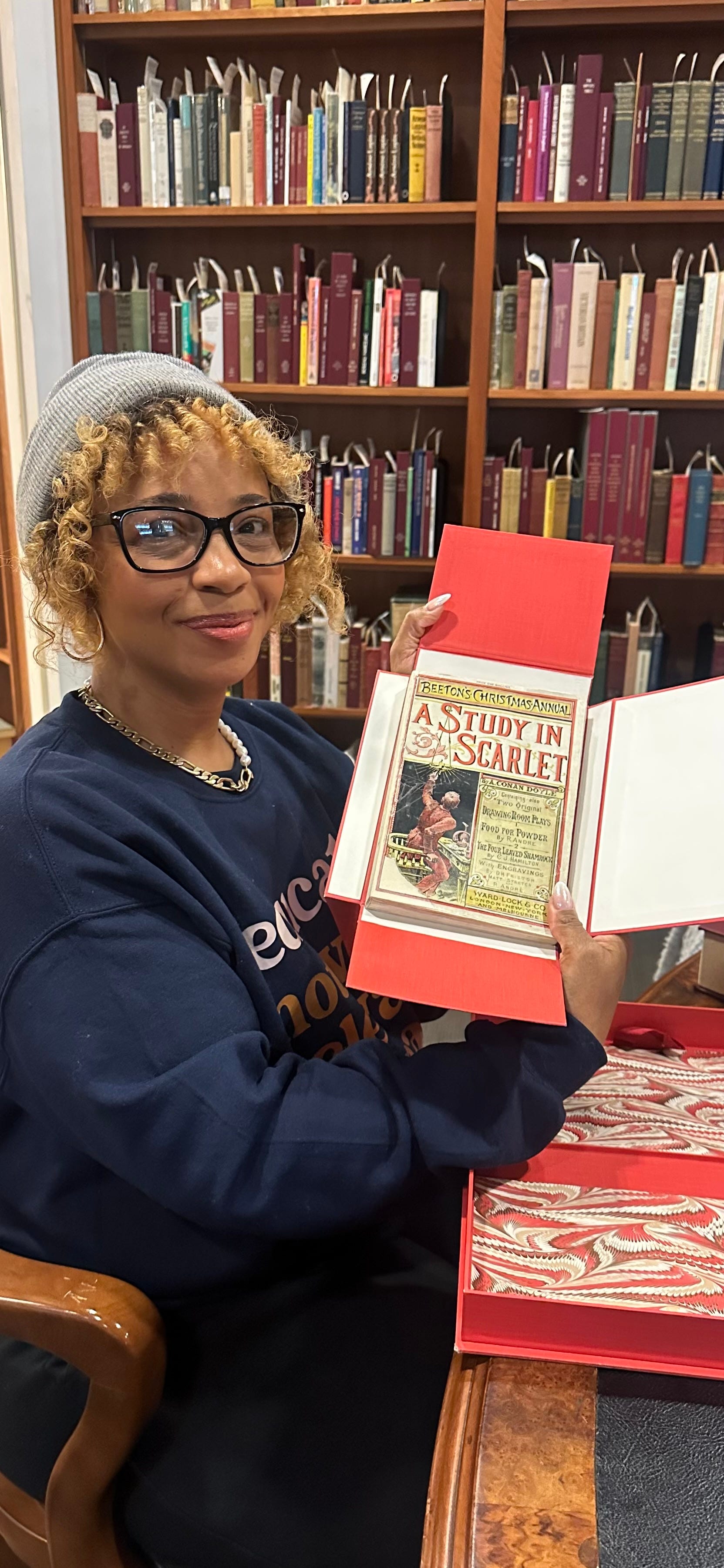
Being in community with books and readers reminds me that my ideas have a place on the shelf. Every time I visit a bookstore, I take a selfie in front of the section where I know my book will live. It’s a manifestation of sorts and a motivator to get back to it… to keep writing, to keep thinking, to keep being curious.
My favorite reads last year were:
Six of Crows by Leigh Bardugo
Crooked Kingdom by Leigh Bardugo
Half a Soul by Olivia Atwater
The Midnight Library by Matt Haig
The Echo of Old Books by Barbara Davis
Remarkably Bright Creatures by Shelby Van Pelt
Recently, I introduced the idea of SLOWBOARDING into the New Year. Slowboarding is resisting the pressure to set goals and metrics at the top of the year and instead focus on who we’re becoming instead of what we’re producing… an invitation to focus on feeling better instead of doing more.
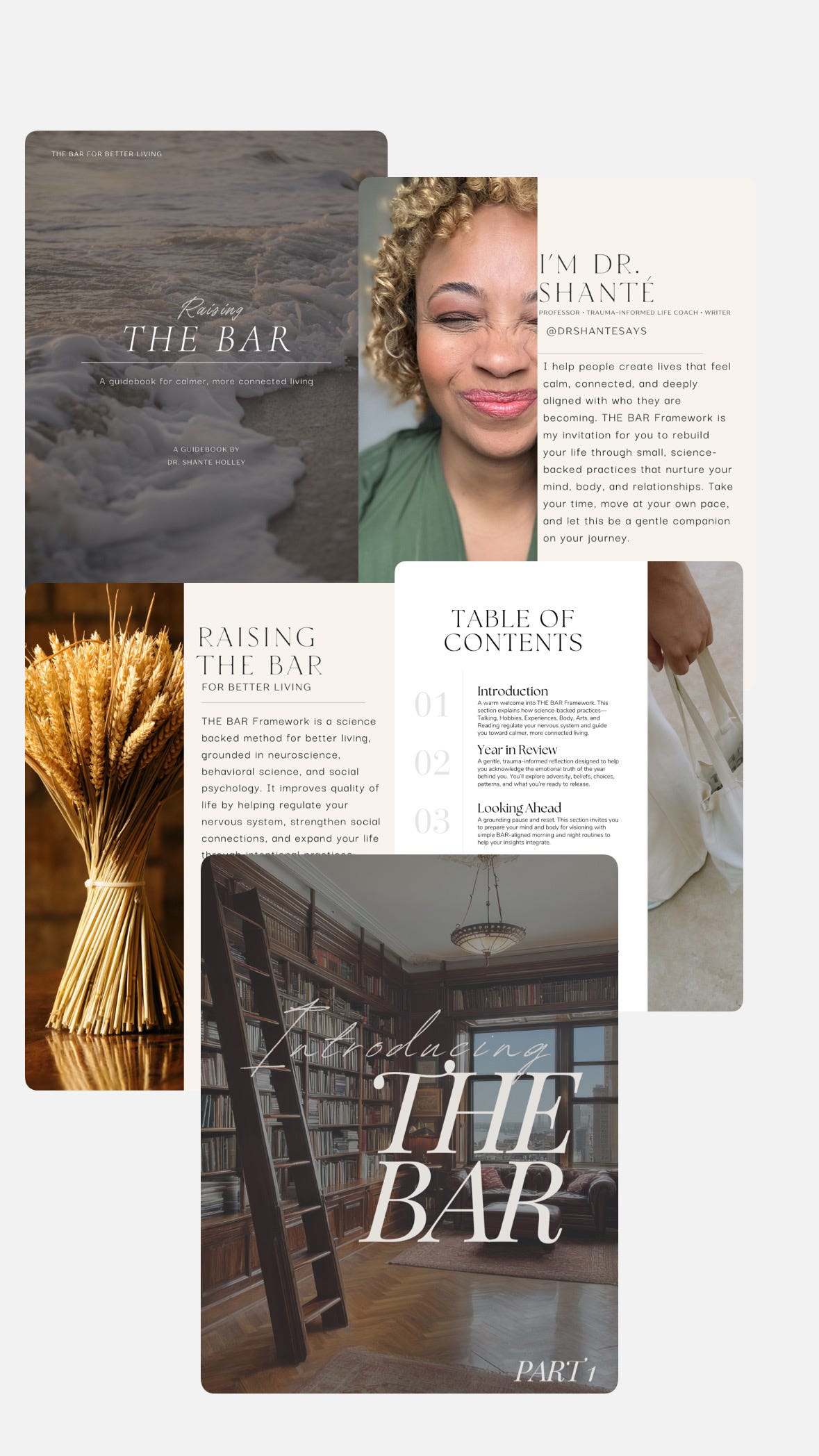
I created a guided workbook to help people move with intention rather than urgency, and to cultivate practices that help them come back to themselves through six practices: Talking, Hobbies, Experiences, Body Movement, Arts, and Reading. It’s called THE BAR. People can download it here.
Use the Code: RAISETHEBAR for a discount

👋 About Dr. Shanté, This Week’s Featured GuestStack Writer
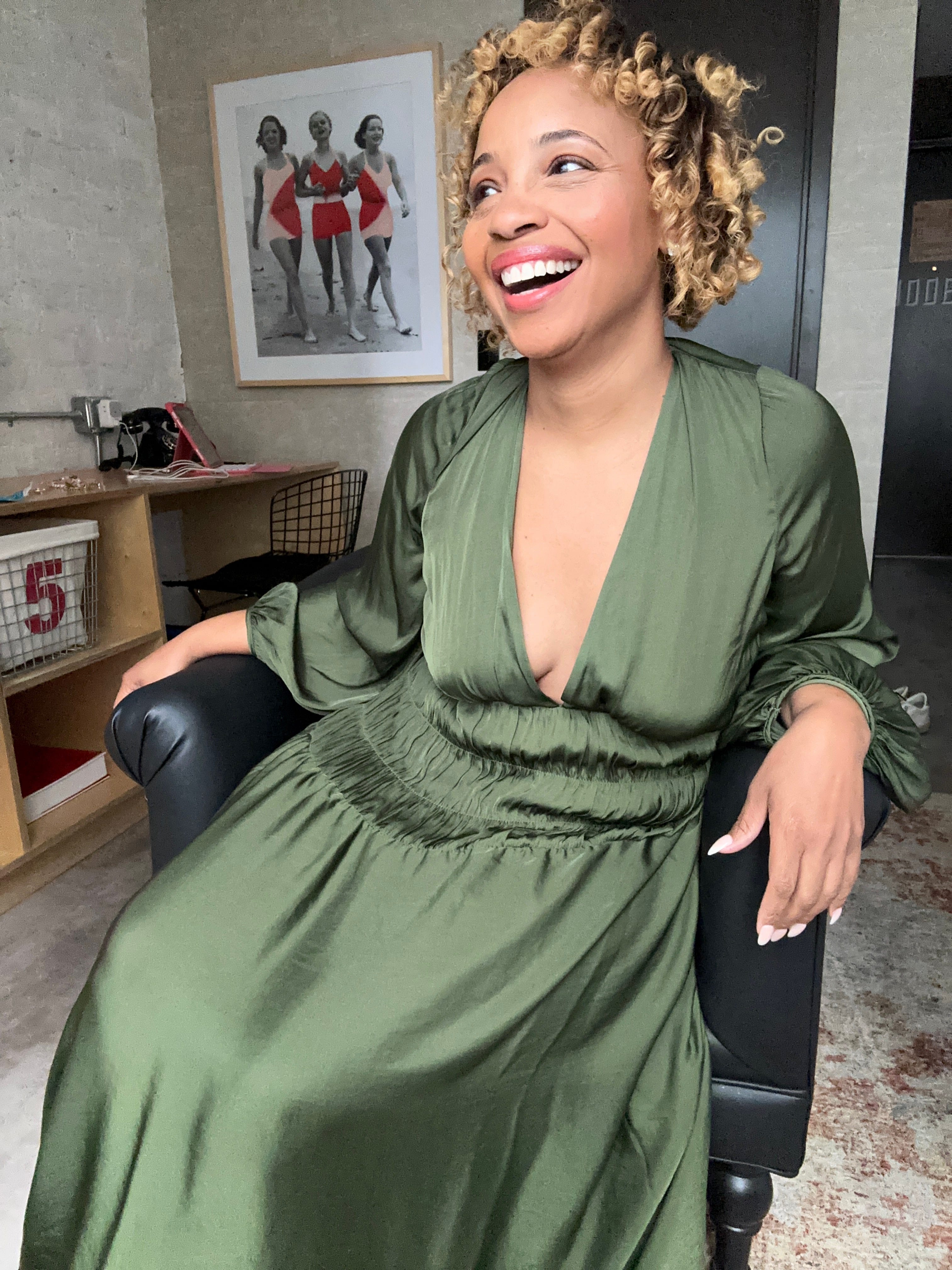
Dr. Shanté Holley is an English professor, writer, and cultural commentator whose work sits at the intersection of literature, mental health, and social change. With over 20 years of experience teaching literature, psychology, and sociology, she brings a rare ability to connect big ideas to everyday lives and spark conversations that transform.
A bestselling writer on Substack and a dynamic presence on social media with more than 350K followers, Dr. Shanté is known for turning complex topics like resilience, trauma, and healing into powerful storytelling. Her accessible, engaging insights have reached millions and resonate across diverse audiences.
She has partnered with national organizations including the American Red Cross, AARP, SAMHSA, the Ad Council, and the Immigrant Justice Corps on campaigns promoting mental wellness and community connection. Her commentary has been featured in Essence Magazine and by the NAACP, and she serves on the Board for Belonging Through Art, an organization dedicated to reducing loneliness and fostering positive social connections through art.
Dr. Shanté is also a prolific podcaster with three successful shows that collectively boast hundreds of thousands of downloads, offering valuable resources for individuals seeking guidance on personal growth, mindset, and healing. A sought-after speaker, she delivers high-value content on emotional resilience, trauma recovery, and self-care at engagements across the country.
Her commitment to mental wellness extends to her academic work, where she was a Fulbright Scholarship Finalist for her research on Blaxit: The Interconnectedness of Racial Trauma, Healing, and Black Immigration to Portugal; a groundbreaking project exploring the intersections of cultural identity, trauma, and healing.
Whether in the classroom, behind the mic, or on stage, Dr. Shanté brings intellectual depth, cultural fluency, and warmth to every dialogue. She is committed to helping individuals heal, grow, and thrive.

Really, really enjoyed reading this interview with Dr. Shanté. One weekend away a month to write sounds like a dream. Excited to one day see her book in stores.